Category Archives: Japanese

Honorably Honoring My Honor

I’ve been working on my 90s anime comedy fantasy RPG Dragon World off and on for nearly a decade now, and I really need to finish and publish it, for a variety of reasons. When that’s out of the way I want to do some supplements, including alternate settings. One that I started on a little bit is “El Kazad,” which draws on weirder bits of fantasy like Bastard!! and the Elric stories. I also want to do an Asian fantasy setting, and there’s just no way I’m going to do that on my own. From basically every standpoint I need actual people from those cultures to contribute, because threading the needle between authenticity, colorful fantasy, and comedy is hard enough with things that come from something like my own culture. Needless to say, not everyone cares that much.

TSR put out the Oriental Adventures setting book for AD&D in 1985, and unfortunately it set the bar for Asian settings in TTRPGs in the Anglosphere going forward. I can cut Gygax a little slack simply because it was the 1980s and good information on Asian cultures was harder to come by, but on the other hand it seems stupid that apparently no one at TSR thought to e.g. write to the publishers of the Japanese editions of D&D for assistance. TTRPG books that badly misrepresent other cultures never stopped in the internet age though, and aren’t limited to Asia either. White Wolf’s portrayal of Italian culture with Clan Giovanni in Vampire: The Masquerade is also just plain inaccurate while trivializing the very real threat the Mafia represents to the people of Italy. On top of simply being a poor attempt at portraying Italian culture, the book has a lot of wasted potential. Venice could be a fascinating setting for vampire stories, but you’re not going to get there if you don’t even understand the basic premise of the city enough to know why there wouldn’t be any catacombs there.

I was thinking about this because of the announcement that a Japan-inspired third-party supplement for D&D5e would include “Honor” mechanics. This seems to come almost entirely from the fact that Oriental Adventures had Honor rules, regardless of whether they were any good. Looking at that bit of OA again now, they’re very Gygax, adding yet another number to keep track of and potentially punish the players with. The DM has to go over the events of each session and dole out bonuses and penalties to each PC’s Honor score, as though the game didn’t have enough bookkeeping already. The score creates NPC reaction modifiers, potentially triggers a PC getting rewards if it goes high enough, and if your Honor goes below zero your character is out of the game and “The player should crumple up the character record sheet and toss it away.”

In typically Gygaxian fashion there’s no explanation for what exactly happens when you reach negative Honor. It doesn’t say that the character becomes a pariah or gets executed; it’s as though someone in the Celestial Bureaucracy decides to delete them from the world. While he uses the word “honor,” it’s really more of a reputation system, though the way Gygax wrote the rules, it’s as though some supernatural force is keeping a tally. If your character did something “dishonorable” in a dungeon and no one in the party told a soul about it, by the rules as written the character’s Honor score—their reputation—would suffer somehow. It’s possible to write this off as one of the many abstractions in the game’s rules, but it’s exactly the kind of thing that Gygax wouldn’t deign to explain in the text. I’m sure at least some people actually played D&D games set in Kara-Tur (or Rokugan, in the 3rd Edition version of Oriental Adventures), but I’ve never actually heard any accounts. That leaves me wondering how the Honor mechanics (among other things) worked out in actual play, but looking at it today it doesn’t seem like something that particularly enhances the experience.

Although vanilla D&D has a few classes that have fictionalized chivalric codes to follow, even for the likes of the paladin Gygax didn’t feel the need to give them any sort of reputation system. Whether a paladin is following their code or is going to fall and lose their powers is left up to the DM’s discretion. The Pendragon RPG, which explicitly emulates Arthurian stories, is one of the few TTRPGs I know of that pins such concerns on Western fantasy characters in a mechanical form.

D&D has massively influenced Western fantasy, and Oriental Adventures’ fingerprints are all over Asian fantasy as created by Western nerds. There are a lot of examples, but one that comes to mind is how the Asian book for Werewolf: The Apocalypse was called Hengeyokai: Shapeshifters of the East (which was nowhere near the worst or strangest choice in White Wolf’s Year of the Lotus books), apparently just because OA had hengeyokai as one of the new races it introduced. Honor mechanics are one of OA’s more unfortunate innovations. Aside from the fact that OA’s Kara-Tur setting isn’t supposed to draw solely from Japan and thus people’s ideas about what constitutes “honorable” behavior ought to vary, the entire concept of honorable samurai has a deeply problematic—and surprisingly recent—history.

Julian Kay pointed me to a lengthy but excellent essay on Bushido, which helped me solidify my thoughts on the subject.

Real-life samurai were warrior vassals of Japanese feudal lords. Although they did have swords, in battle they acted more as mounted archers, not unlike the Mongols. (Minus the part about being poised to conquer most of Eurasia.) While they did have moral ideals, in practice a lot of major battles were decided by defections. To the extent that ninjas were real, they were spies and assassins, and the major ninja clans were subsumed into the wider political structures and their power struggles . Samurai were heavily armed and privileged assholes, and the lower classes largely despised them. Despite living in a society with public morals—Buddhism was a state religion for a significant stretch of Japanese history—the samurai were no less inclined to do horrible things and go “fuck you, because I can” than any other powerful men. The Tokugawa shogunate brought about an era of peace however, and the samurai became bureaucrats who put their spare time into the arts and had swords as symbols and heirlooms rather than weapons per se.

The Meiji Era saw the modernization of Japan–Japanese leaders realized just how far behind they were and rushed to catch up with the West–and the removal of the traditional class system. While there are still people today who can claim samurai lineage, there are no special privileges afforded to them per se. In the late 1800s some ex-samurai didn’t take this well, and there were a series of conflicts, culminating in the Satsuma Rebellion of 1877 that ended the samurai as a recognized social class. The samurai became a page in Japan’s history, and the march of progress continued.

The concept of Bushido (the “Way of the Warrior”) and its supposed code of honor, which put samurai under intense pressure to be honorable or commit seppuku, came from Inazo Nitobe, who wrote a book in English called Bushido: The Soul of Japan, in an attempt to rehabilitate Japan’s image in the West. Although a Japanese man born in Japan, he admired Western culture to the point where he was highly fluent in English, converted to Christianity, and married a Caucasian woman. While he apparently had some genuine expertise when it came to English-language literature, he was comparatively ignorant of Japanese history.

Since information about Japan was so scarce in the early 1900s, his book was nonetheless a huge success and people took it as fact. Actual historians in Japan wrote scathing critiques, calling out the book’s blatant historical inaccuracies. The notion of “Bushido” as he defined it simply didn’t exist in Japan before that, and Nitobe’s conception of it was at least as much Christian as Japanese, having been created to appeal to Westerners in the first place by way of equating honorable samurai with virtuous, chivalrous knights. (The notion of a chivalric code that knights followed was itself a result of mythologizing in folklore and literature in the first place.) Western media, whether James Clavell’s Shogun or the film The Last Samurai, uncritically portrayed his version of the samurai ethos, which the likes of Gygax also internalized and spat out in the form of Honor rules.

That might have been the extent of Nitobe’s influence, but in the early 20th Century the modernizing Japan was flexing its military might, fighting and winning wars against other Asian counties and even Russia. This was when Japanese nationalism took hold and the military—which at the time was highly independent of the civilian government—became a hotbed of extremism. It wasn’t unusual for nationalists to assassinate civilian politicians who weren’t sufficiently behind the military’s imperialist projects in Asia.

In the buildup to Japan’s entry into World War II, the Bushido myth proved an effective propaganda tool to encourage Japanese troops to become fanatics for the cause. Katanas were a powerful symbol of national pride, even though the mass-produced ones handed out to Japanese officers represented a nadir in Japanese sword making. The Imperial Japanese military’s evil deeds weren’t totally unique in human history, but they were nonetheless unspeakable, solidifying the anti-Japanese sentiment that persists across East Asia today.

In the postwar years, the Japanese psyche dealt with the nation’s defeat—and especially the atomic bombings—in a variety of ways. There was a great national shame, some voices proclaiming that Japan could reinvent itself as a new force for peace and progress, and of course some ultranationalists who cling to that murderous ideology to this day, just as there are still fascists and their ilk in the West. While you occasionally get a manga or light novel from a creator who’s into Japanese nationalism, by and large Japanese narratives about the samurai, although idealized to be sure, don’t have anything like the caricature seen in Western media.

Historical accuracy is hard to achieve even for historians, much less game designers. History is ultimately a story we’ve constructed to explain the past. When we do it ethically, we do what we can to have that story reflect the available evidence, but honest history will admit where we simply don’t know what happened. Future historians who try to untangle the moment we’re currently living through may have an astronomical quantity of tweets to sift through, but if you go far enough into the past, you reach eras from which we just have scant collections of pottery. For lay people, primary sources are often arcane or boring, and we get out view of history from simplified lessons and pop culture. To some extent that’s unavoidable, but it does open us up to propaganda like 300, a film that historians knowledgeable about the era in question would find at turns laughable and sinister.

In science education there’s a concept called “lies to children.” It’s essentially the idea that you have to teach a version of things that isn’t exactly right in order to make it simple enough for young learners to get enough of a footing to be ready for the real thing. Atoms don’t have electrons going around in neat little orbits like in the picture in an elementary school textbook, but your average 3rd grader isn’t anywhere near ready for a lecture on quantum mechanics. History is another subject that can easily get deeper than laymen have the time or knowledge base to comprehend. Replacing the numerous and disparate threads of history with easily digestible stories seems unavoidable to some extent, but we need to be more careful about the stories we choose to tell ourselves as a society. We still have people trying to defend the lionization of Christopher Columbus for example, even though he somehow managed to be a vile person even by the standards of 15th Century Genoa, which is saying a lot.

Role-playing games are vehicles for us to gather to enter worlds of our own imaginations, and in practice you have to have a consensus about the fiction world in question among a small group of people. That makes them naturally work against true historical accuracy, though for that matter it similarly makes it hard to get a group together to play a licensed game unless everyone is on board with the licensed property in question. When I say I want “authenticity” in an Asian setting for Dragon World (and Asian settings in TTRPGs in general), I don’t mean rigid conformity with history, but I do what something where someone from the cultures in question wouldn’t feel insulted or roll their eyes.

The colorful ninjas of Naruto have virtually no connection to the historical spies—though the ninja likely encouraged fanciful myths about themselves—but it reflects a native’s knowledge of Japanese culture and mythology, and is richer for it. D&D’s attempts at ninjas fall into the “guys in black pajamas” stereotype beloved by Cannon Films, and lack the bonkers fun you get from things like ninjas summoning giant supernatural frogs. Not every source of inauthenticity will lead us on a journey that includes discussing hideous war crimes (seriously, even at the heights of imperial fervor Japanese civilians were still shocked at what their military was up to in Asia), but there’s inevitably something deeper and more interesting, such that even if we were to set aside questions of what is respectful (which we shouldn’t), we’d still be missing out.
Catching Up

There’s been a bunch of stuff going on that I haven’t quite gotten around to posting about here, so here goes.

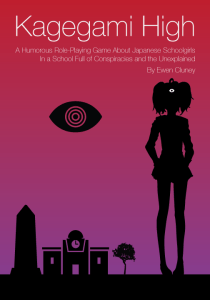
Kagegami High

The game is finally out! Well, the PDF is up for sale on DriveThruRPG. Getting the POD versions set up has been unusually difficult, since there have been some weird file conversion issues with CreateSpace, and DTRPG’s system for setting up POD titles is apparently messed up at the moment. Update: But it’s now up on Amazon at least!

Kagegami-High-Cover

The last push took a lot of energy, and I’m still kind of marveling at having written a 168-page book that’s so dense with references and setting info. I haven’t done all that much with setting in my games (though Dragon World is going to have the setting of Easteros in it), but this book is bursting with details about the school, and has 72 NPCs. My only regret is that I didn’t put more Utena-inspired stuff in.

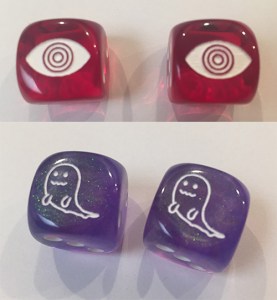
Also the custom Weird Dice (and Spooky Dice for Spooktacular) are now available from IPR. Getting custom dice made through Chessex was pretty fun and easy, and definitely something I’ll do more in the future when I can find good excuses for it.

dice

Kickstarters

I have not one but two Kickstarters in the works.

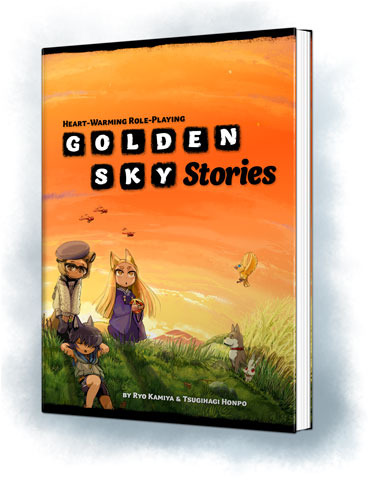
Golden Sky Stories: Twilight Tales is the title we finally settled on for Mononoke Koyake, the first Japanese GSS supplement. We’re going to be properly publishing it in English and getting a print run of physical books, plus doing some nifty stretch goal stuff, albeit not nearly as much as last time (three books’ worth and then some was a bit much, not to mention the battle to get all the physical stuff printed and shipped). I was originally planning to do the Dragon World KS first, but Twilight Tales is closer to being ready, but really we’ll see how it all shakes out.

MK Cover.png

Dragon World is also going to be Kickstarting. I need to nail down some final planning stuff, and I’m waiting on the finished cover art (which is going to be elaborate, pretty, and very anime) before I launch. We also have quite a few stretch goals lined up, including some pretty cool stuff I’m looking forward to.

dragon world art sample

For both we’re going to be including wall scrolls from CustomWallScrolls.com among the rewards. We did that for GSS, and we were generally really happy with the quality and service.

DriveThruRPG Stuff

DTRPG has a thing where you get awarded a certain amount of Publisher Promotion Points, and I noticed that both the Yaruki Zero and Star Line accounts had accumulated kind of a lot, so I decided to make an effort to try using them. In addition to getting featured product impressions, I’ve tried having Golden Sky Stories, Kagegami High, and Maid RPG as Deals of the Day. The amount of sales that resulted wasn’t world-shattering, but it was substantially more than those games got without that extra promotion behind them, especially for Kagegami High (which hasn’t already gotten into the hands of quite so much of its potential audience).

Combined with the GM’s Day Sale, this is already one of the best months for RPG sales I’ve had in a while, so I’m thinking more about how to promote my stuff and reach more people, even though it’s potentially kind of a lot of work.

Other Randomness

  • I got inspired to check out the Savage Worlds version of Rifts. While I’m not really a fan of Savage Worlds, I was nonetheless really impressed and ended up buying all three books. (Though if I play an actual game with them I’ll probably use FAE or Strike! or something.) They managed to create a take on the world of Rifts that’s oriented towards having exciting adventures in that setting, where Palladium’s own books too often felt like an assortment of random stuff, which was cool but didn’t really cohere into a basis for stories. Each archetype is super-enthusiastic, and sells you on it being awesome to play, and in many cases makes changes that make it way more interesting.
  • A while back I designed Duel Questers, a mini-RPG thing for Millennium Blades, and it’s now available in the MB artbook. MB has a wonderfully bonkers setting, and it was a lot of fun to play around with it.
  • Jessica Price (PM at Paizo) has been posting some fascinating and insightful stuff about geek culture on her Twitter. Here’s a storify, and here’s another thread of note.
  • Nekomimi Land, a messed-up dystopian novel I’ve been working on for way too long, is nearly ready for publication, once my editor finishes with it. It’s raw and weird and imperfect, but I want to finally get it out into the world. It’ll also be my first self-published work of fiction, and I want to do more, albeit something a bit lighter next time.

Golden Sky Stories Kickstarter

I probably should take some time to mention here that the Golden Sky Stories Kickstarter has launched at long last. We’ve been just totally blown away by the level of support we’ve gotten, and while we were confident we would get funded, it’s massively exceeded our expectations, blowing through $18,000 worth of stretch goals in about a day and a half. Or to put it in perspective, we’re neck and neck with Evil Hat’s Fate Dice Kickstarter.[1]

GSS Book Mockup

You can read about GSS in more detail on the Kickstarter page and its updates and comments. Right now we’re in the process of working out additional rewards and stretch goals and some other issues, and we’ll be doing a major update soon. The whole thing’s been really emotional for me–including a hefty, powerful dose of stress if I’m perfectly honest[2]–but also unbelievably gratifying. We worked really hard on this–and we have a good deal more hard work ahead of us–and people are responding far more than we’d dared to hope.

(Also, I just got interviewed for an episode of The Jennisodes, though it’ll be a few weeks before that episode goes live.)


[1]Also well worth your time if you do anything that uses Fudge Dice, though the Fudge Dice Infusion KS is the one that needs some backer love if it’s going to succeed. Also, I think I might be one of the very few people on the planet who actually has too many Fudge dice already, as I have two GM packs from Grey Ghost, the wizard set from Evil Hat, and four red runic Fudge dice from Q-Workshop.

[2]Some time in June or July I’m going to place an order for 2,000+ books. And those books are going to have to go somewhere, and at current count a lot of them are going to have to go to about 700 separate people.

Tsugihagi Honpo: An Innovator

Ryo Kamiya, the designer of Maid RPG and Golden Sky Stories (and a few other games) is one of the major people behind an independent game publishing company called Tsugihagi Honpo.[1] I wanted to take a little time to talk about what they’ve been up to, because they’ve been doing some pretty amazing things that could help expand, improve, and enliven the TRPG scene in Japan.

E-Books
Japan is far behind the West in terms of the adoption of e-books. The patterns of tech adoption by the Japanese tend to be different in really fascinating ways, sometimes cultural and sometimes pragmatic. They can be way ahead of the U.S. (as was the case with cell phones) or oddly far behind (I’ve heard that many Japanese companies still make extensive use of fax machines instead of email). While devices like tablets are hugely popular and the Amazon Kindle is indeed available in Japan, the selection of e-books available for purchase is relatively small. There may be a cultural tendency to prefer physical artifacts over digital downloads, but the real issue is with the publishing industry. Japan is one of the more literate societies on the planet, but traditional publishers are incredibly set in their ways, and have largely refused to seriously consider releasing their properties as e-books. There’s an attitude that piracy isn’t merely a concern, but something to be absolutely avoided at all costs. This is largely true of tabletop RPGs as much as novels, partly I suppose because it’s simply not the standard overall, and partly because a surprising number of TRPG publishers are actually small subsets of large, traditional publishing houses.

On the other hand there is a flourishing doujinshi scene that produces a massive volume of fan works. TRPGs are only a small part of that, but given that the heart of the doujin scene is a convention that attracts about half a million people, that small part still produces a lot of interesting material. There’s even some electronic publishing going on, through sites like DLSite and Melon Books, which is where you’ll find the very few Japanese TRPGs available in PDF form. Tsugihagi has a few available (including the English version of Maid RPG), and there are some other games like Giant Allege and Machine Makers, plus replays and some other material for existing games. More recently, Ken Akamatsu’s site J-Comi started offering some older TRPG material for free.

mzl.cmacpaka.480x480-75

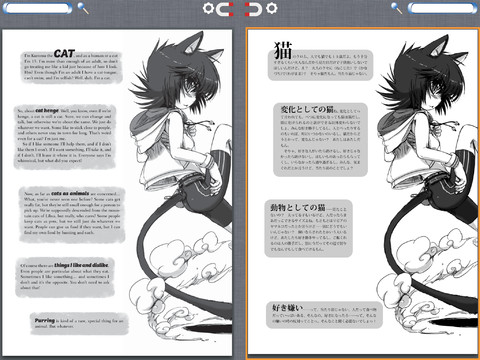
Tsugihagi went so far as to make their own PDF reader app for iPad, Narabete Reader, which allows you to view two different PDFs simultaneously. Of course, in their Narabete Reader FAQ they resort to mentioning that PDFs are common for American RPGs, because Japanese RPG PDFs are so hard to come by. Needless to say I’m hoping that TRPG PDFs take off, though that’s partly just because even with the added hoops of buying through a Japanese site, getting files from DLSite is a heck of a lot easier and cheaper than special ordering a book from Japan.

Nechronica Miniatures
3D printing is a technology that has some major implications for tabletop gaming, as it has the potential to massively boost the variety of physical artifacts that people can affordably produce in small numbers. Right now making miniatures is getting more attainable–there have been countless very successful Kickstarters for miniatures games–but it’s still something that involves tens of thousands of dollars. 3D printing has the potential to let projects be on as small a scale as you want. Shapeways is already providing a Lulu-style POD service for 3D-printed objects, but I was rather excited when I found out that Tsugihagi is offering a set of Nechronica miniatures. They’re not cheap, and they have the “fuzzy” look of the current generation of color 3D printing, but it’s also the first instance I know of of a game publisher doing an official 3D printed accessory.

IMG_0752

TRPG Publishing Workshop
Another pretty amazing thing they’re doing is the “Tsugihagi School” workshop. They charge 2800 yen for an all-day program of seminars on desktop publishing and game design. In the U.S. we’ve done plenty of convention panels and podcasts about this kind of thing, and there have been a few convention workshops here and there, but I don’t think I’ve ever heard of anything quite like this. That it’s something viable in a paid workshop format is I suspect in part a result of Japan being much smaller than the U.S. It’s taking place in Saitama, which is part of the Tokyo metropolitan area, and while it’s hardly in everyone’s back yard, a larger portion of the potential audience can get there on the train than would be the case for a similar event in any given U.S. city.

Online Play
Also of interest is how the workshop includes a session solely dedicated to talking about online role-playing. From what I can gather, this is becoming a major trend in Japanese TRPGs. The term オンラインセッション/online session gets shortened to オンセ/onse, and there are dedicated platforms for it, like Dodontof. This is of particular interest for Tsugihagi since one of their games is extremely adult in nature and probably not something a lot of people would want to play face-to-face. Online RPG play isn’t at all unusual in the U.S., but with rare exceptions (like Code of Unaris) it’s very rare for publishers to address it in any meaningful way.[2] Dedicating time and energy to looking at ways to design games that are better for online play is genuinely a really cool thing, and something I hope we’ll see more of.


[1]Which literally translates to something like “Patchwork Book Shop,” but in English they call themselves “PatchWorks.”

[2]I don’t have a lot of experience with playing RPGs online, but it’s definitely something I want to address in my own games.

Arianrhod 2E: The Focus System

ara2e_jyoruI wound up getting a copy of the Advanced Rulebook (上級ルールブック) for Arianrhod 2nd Edition, F.E.A.R.’s dungeon fantasy RPG with an anime/JRPG style. The book includes advanced classes (that characters can take at level 10), prestige classes, new skills for the base classes, items, guild skills, monsters, traps, dungeon objects, and optional rules. The thing in it that I found the most interesting is what the designers call the Focus System (FS for short). The Focus System is something a lot like Skill Challenges in D&D4E, but better in pretty much every way. There’s even an FS Check Management Sheet, which isn’t quite as insane as it might look. It has spaces for three FS checks, and F.E.A.R. is just really big on making sheets for things.

An FS check goes in rounds, and one of the neat things about it is that you can have an FS check going at the same time as combat. Making a check for the FS uses your main action, so you have to choose between that and attacking. During the FS check a character can make Progress Checks or Assistance Checks. A Progress Check is a check[1] on the attribute (or other appropriate check) determined by the FS check’s specifications, and you gain or lose Progress Points according to your margin of success, anywhere from -2 to +4 (with a special bonus of +1d6 plus 1 per die that rolled a 6 on a Critical), and your ultimate goal is to accumulate enough Progress Points to complete the FS check. However, an FS check has a limit on how many characters can make Progress Checks per round (2-4 in the examples), so other characters can make Assistance Checks during the initiative phase, and if successful they give a +2 bonus to another character. A typical FS check needs 10 to 20 Progress Points to proceed (10 in most of the examples), but the PCs have a limited number of rounds to pull it off (in the included examples 3-5 rounds). When you design an FS check, you take the preferred number of participants times the number of rounds to determine the Progress Point objective.

Events are the other major thing that make an FS check more interesting. These trigger based on how many Progress Points the PCs have gained, usually around one event per 3 Progress Points (paced so you get one every 1-2 rounds). Events can change what stat you need to make a check with, alter the difficulty you have to beat, or also affect the FC check’s end conditions (giving you more or fewer rounds to complete it say). The book has 5 full writeups of example FC checks, and one of these is for disarming a particularly complex trap. It starts with Trap Removal checks (a special Thief skill, based on Dexterity), then the difficulty drops as you start to understand the trap, then thwarting a mechanism requires Strength checks, and finally at the end you’re left with the choice of the red wire or blue wire, and you need to make a Luck check. If the PCs get enough Progress Points at once to trigger multiple events, you take the most recent check requirements and retain things like modifiers to difficulty numbers from intermediate events.

If the PCs get enough Progress Points in time, they’ll succeed and get an XP reward at the end of the game session. The text also notes that you can have competitive FS checks basically by having two groups doing the same FS check in parallel and competing to be the first to get the required number of Progress Points.

That’s the basics in a nutshell. I find it pretty fascinating both as a game mechanic and for the simple fact that I don’t think I’ve ever seen this kind of thing from a Japanese TRPG before. I don’t know whether D&D4e played into its design (the Arianrhod 2E Advanced Rulebook did come out in 2011, and 4e is available in Japanese), but conflict resolution mechanics are about as nonexistent as GM-less RPGs there. Needless to say I want to use some ideas from the Focus System in Slime Quest’s Challenge system, though I think my take on it will have some elements of the Mouse Guard RPG as well. There’s a lot of interesting things in Japanese TRPG design, but sometimes there’s a certain rigidity at least in the rules as written, which shows here in how Progress Checks involve predetermined attributes and strategies. I’d much rather just ask the players how they’re tackling the problem and have that then play into the rules. On the other hand it’s substantially more developed than D&D4e’s Skill Challenges, and if I was going to run a 4e game I’d put together a houserule for improved SCs drawing from the FS check rules.


[1]In Arianrhod you make a basic check by rolling 2d6 and adding your attribute’s modifier (which is 1/3 of the base attribute number, and typically in the low single digits to start with). Snake eyes is a Fumble, and box cars is a Critical. The game doesn’t have “skills” in the Western RPG sense, but certain classes can have abilities that let them make special kinds of checks such as trap-finding or alchemy.

Golden Sky Stories Update: Progress and Bonuses

I figure we’re a bit overdue for an update on what’s going on with Golden Sky Stories, so here goes. Right now the plan is to launch the GSS Kickstarter on the heels of Tenra Bansho Zero‘s Kickstarter. Assuming Andy and Luke keep on schedule, that means we should be launching the GSS Kickstarter around the end of June. That means we have a couple more months, and we’ll be using that time to get everything in order so that when we do our own Kickstarter we’ll be that much more able to get everything out to everyone without undue delay.

Slow and Steady Does the Layout
The graphic designer for Golden Sky Stories is none other than Clay Gardner. He is the designer of OVA: Open Versatile Anime, and has done graphic design work for a huge variety of projects, including several games from Minion Games. The original Japanese version of Golden Sky Stories was already a feast for the eyes, but Clay is using his graphic design skills to add another layer of polish all the same. He recently put up a blog post where he shows off what he’s doing with the power descriptions for rabbit henge. Clay’s currently about halfway done with the layout, and I’m really liking how it’s looking so far.

Something Fishy
A while ago I hit on the idea of making a new, original character type for GSS as a Kickstarter reward. Ben Lehman (who you may know from games like Polaris and Bliss Stage) stepped up and offered to try his hand. About a day later he sent me his first draft of a writeup for fish henge. We’ll be doing some refinements between now and the Kickstarter of course, but Ben’s writeup is already wonderfully whimsical and mythical. It’s a bit of an “advanced” character type that’ll be a little tricky to play.

I’ve also been working on a writeup for “pony henge,” which are indeed partly inspired by My Little Pony: Friendship Is Magic, albeit with plenty of elements inspired by reading up on horses on Wikipedia. Looking up idioms/cliches about an animal is a great way to come up with powers for henge by the way. I’m still working out what exactly to do with these new writeups, but at present I’m thinking of having the fish henge be a Kickstarter exclusive and having the pony henge be a freebie.

Yuuyake Koyake/Golden Sky Stories is Coming!

If you’ve been following this blog, noticing my forum posts, or talking to me in person, chances are you saw this coming.

Star Line Publishing is a joint publishing venture between me and my longtime friend Mike Stevens (with a few other people lending a hand), and I am very, very happy to announce that Star Line Publishing’s first big release will Golden Sky Stories, an English version of Yuuyake Koyake, a tabletop role-playing game by Ryo Kamiya, the designer of Maid: The Role-Playing Game.

Golden Sky Stories is a heartwarming role-playing game. Players take on the role of henge (pronounced “hen-gay,” like a chicken that’s happy, not a Celtic monument), animals with just a little bit of magical power, including the ability to temporarily take on human form. They live in a little town in rural Japan, where they help ordinary people solve problems and become friends. This is not a game that will replace all of your other games, but it’s a game you can turn to as a change of pace, to go somewhere warm and safe. It is a diceless, resource-based game, and it’s meant for game sessions to last between 45 minutes and two hours.

For Maid RPG we crammed three books worth of material into one volume, but for GSS we’re starting with a thorough and careful translation of the 120-page core rulebook. It introduces the base rules of the game, lets you play as six different kinds of henge (foxes, raccoon dogs, cats, dogs, rabbits, and birds), and includes a replay, NPCs with story hooks, two scenarios, and a guide to Hitotsuna Town. We’re aiming for a very faithful translation, and the only notable change will be the addition of several pages of cultural notes. The original Japanese version has three very excellent supplements (plus a doujin supplement for, of all things, Touhou), but the main book is wonderfully complete by itself. We very much want to put out the other material, to tell the full story of Hitotsuna Town and give you many other new kinds of characters to play and meet, but one thing at a time.

For various reasons it’s taken some considerable time to sort everything out enough to go public, so as of this announcement we’ve already been working hard on this project for some time. We aren’t yet ready to set a firm release date, but things are actually pretty far along. The actual translation and editing are already done, and our layout guy (Clay Gardner, creator of OVA) has already gotten started. We expect the book to be a little over 120 pages, and it will feature fantastic art by Ike, who has since gone on to find success with an excellent manga called Nekomusume Michikusa Nikki (Catgirl’s Wayside Grass Diary).

As with Maid RPG, I’ll be posting up previews with tantalizing details about the game and its workings leading up to the actual release. I’ll be writing about the setting, the game’s workings, and what you can expect when we do finally release the supplements in English.

If you would like to help make Golden Sky Stories a reality, we’re planning to do a Kickstarter to raise money for the first print run. We believe this is a wonderfully unique game, and we hope you’ll help us spread the word!

Retailers, distributors, and anyone else interested in this game are welcome to contact us at info@starlinepublishing.com.

Magical Burst Development Update 2

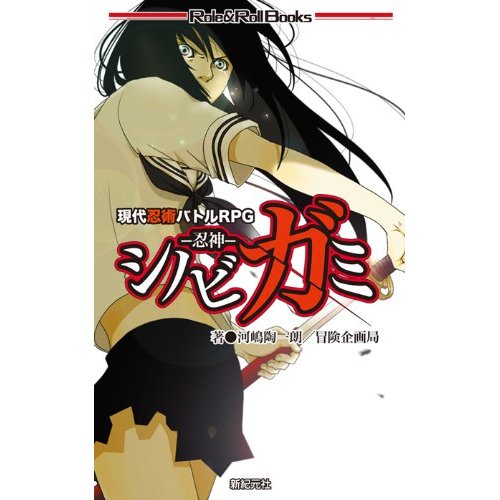
Matt Sanchez’s recent blog post on Adventure Planning Service‘s Saikoro Fiction[1] system got me inspired to finally sit down and read the rules of Shinobigami, which had been sitting on my bookshelf for way too damn long. It’s a really neat game, and the design of it makes me wonder how much is American indie RPG influence and how much is Kawashima just being that brilliant by himself. The rules are pretty short too–something like 70 pages including stats for NPC enemies and setting info–and about 2/3 of the book is taken up by a replay.

There are a ton of things I could gush about with regard to Shinobigami (especially where the combat system is concerned), but Matt’s planning to cover all of the Saikoro Fiction games in depth, so you can tune into his blog for more detail in the future. The big thing from Shinobigami that has me all inspired to work on Magical Burst after taking a bit of a break from it is the way it breaks the action into scenes. I’ve realized that on paper at least my problem with the current version of Magical Burst is that the rules do very little to guide the action. There are important bits of the narrative (like how the magical girls actually find the youma) that are pretty much handwaved. I know for a fact that the folks who’ve been playing the game have been able to work with that, but personally coming at the game I’m not sure I could actually do that good a job of running it.

Shinobigami is about modern-day ninjas, and while it’s possible to have the PCs all work together, the default assumption is that they end up in two competing factions[2]. With conflicting goals and secrets (established by the GM giving out Handouts[3]), the players basically take turns setting up scenes where they pursue information, relationships, etc. that can get them closer to their goal. You can also attack another PC on your turn, but you have to first figure out where they are. After a certain number of rounds of player-led scenes (usually 3), they arrive at the Climax Phase, which is typically an epic battle.

I think something similarly player-led is about what I’m looking for to make Magical Burst more like what I want. There can be other variations, not to mention a distinct possibility of failure or just ignoring the threat, but the base Magical Burst story is about the magical girls finding and defeating a youma and what it costs them to do so, so the kind of structure that Shinobigami uses makes a lot of sense for it. That’s going to affect how I approach a bunch of other things (especially relationship scenes), but we’ll see how it goes.

Aside from that, the things I’m looking at in this stage are going to be relatively small until deeper analysis and/or playtesting suggest otherwise.

  • I’m planning to make youma stats scale with the number of magical girls. It’s become a thing for me with both design and actual play that finding the right balance in terms of opponents that can challenge an entire group of foes while not being burdensome for the GM to keep track of is a big deal. On top of that, in Magical Burst a youma is (in D&D4e terms) normally a solo, and even the guys at WotC have had a hard time getting those right. This is mirroring some of the stuff I’ve been working on for Slime Quest, and I think “solo” type monsters need to scale not only stats but capabilities in order to keep up with a growing number of PCs.
  • In general I need to do a more rigorous analysis of the math to keep things on track. Luckily today a fan pointed me to AnyDice.com, which I think will become a very useful tool for that kind of thing.
  • Obviously, the Change tables need some work. Since I made the decision to switch from Magic uniquely producing Mutations to all three kinds of Overcharge producing Changes, I want to have three full d66 tables instead of one giant table and two half-size ones. I’ve tried to make the Heart and Fury ones be more derangements, but I’m thinking I’ll let them get more into the realm of mutations. Plus, I can prune the Magic Change table considerably, since I’m sure there are results in there that are at the far end of what I got from wracking my brains.
  • The magical girl creation tables were one of those “stumbling across the finish line” kind of things, and I do need to revise them some. The costume table in particular has a bunch of elements that belong (or are duplicated) in the weapons table. Plus I think “Key” is in there twice. (Did anyone catch on to how the names table is mostly taken from names of magical girls and other anime heroines?)

A Couple Other Things
Jake Richmond is going to be on the Yaruki Zero Podcast at some point to talk about the new Cel*Style games and such, but in the meantime you can listen to him on the Found in the Alley podcast. Jake and the podcast hosts are really entertaining, and I got really inspired listening to him talk about the new games. There’s also the full Panty Explosion head-punching story (amongst others), and it seems Jake is even worse than me for having his eyes glaze over from long rulebooks.

I’ve also been brainstorming for a new iteration of Raspberry Heaven, my heartwarming slice of life Japanese schoolgirls game. There will definitely be some other things at play, but it seems like it’s going to look a lot like a cute, happy version of Fiasco that uses playing cards. I really like Fiasco’s subtlety, and I think the trust it puts in the players is one of the things that Raspberry Heaven really needed. I have half a page of notes so far, but I’ll have to get into things to get a better idea what’s what.

Also, Raspberry Heaven is another project where I’d want the final product to have manga rather than anime style art.

[1]“Saikoro” means “dice,” and the logo on the back of the books abbreviates the name to “Sai-Fi.”

[2]The book also offers Battle Royal as a scenario setup (but warns it can be time-consuming) and hybrids of the various types.

[3]It’s an increasingly common thing in Japanese TRPGs that the GM gives players “handouts” that set up where their respective PCs fit into the story. I’m sure it would get mixed reactions from Western gamers, but it also seems like it’s one of the things that would make Shinobigami sing in actual play.

New TRPG Stuff

So, the other day Jono stopped by to give me the TRPG books he was kind enough to pick up for me in Japan. So now I have FIVE new RPGs to read through (the others being Apocalypse World and FreeMarket).

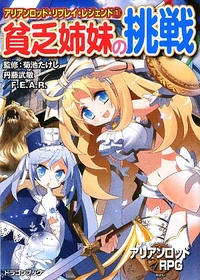
貧乏姉妹の挑戦 (Poor Sisters’ Challenge)
This is an Arianrhod replay that I got basically because I want to read a full-length replay of a game I’m reasonably familiar with. The book starts off with an introduction to TRPGs and Arianrhod, and then goes through the process of the group creating and introducing their characters before starting on the actual gameplay. The most interesting thing so far is that it shows how the GM uses “handouts,” which are a regular part of playing Arianrhod. There are as many handouts as there are players, and each one gives a player character a place in the world and a connection to the rest of the party. For example, in this replay PC #1 is the child of a wealthy merchant who suddenly found himself deep in debt, and who is going into gladiatorial fights to pay that debt. PC #2 is someone very close to PC #1 (which ended up being her twin sister), PC #3 is a close associate of the father’s with an obligation to take care of the kids, and PC #4 is a trainer who wants to develop PC #1’s potential.

This isn’t something you’d do with every game of course, but in my D&D group, although we’ve largely mastered the actual rules, figuring out a solid reason for why exactly the PCs are adventuring together and will stick together seems to have become harder and harder. Of course, when viewed as part of a coherent world the “adventuring party” model is a bit implausible.

りゅうたま (Ryuutama, or “Dragon Egg”)
I now officially wish I’d gotten this game sooner. Ryuutama takes place in a world born from dragons. In the game the players take the role of ordinary people who are on the greatest journey of their lives (the closest thing to a combat class is the Hunter, and others include Farmer, Healer, Minstrel, Merchant, Healer, etc.), while the GM plays a dragon that watches over them. The GM’s dragon records their story and then feeds it to one of the seasonal dragons so that the seasons can be more abundant. There are four kinds of dragons, and as the GM you pick one of the types according to what kind of story you want the game to aim for, and you get some special abilities to help make it happen.

迷宮デイズ (Meikyuu Days)
This is a sort of modern-day version of Meikyuu Kingdom that I’ve been curious about for a while now. The book has minimal illustrations (which is weird compared to other MK books and Satasupe, though less so when looking at Shinobigami I suppose) and very dense text. The essence of the setting is that it’s the present day, and the Dungeon Hazard (that totally consumed the world of Meikyuu Kingdom) is eating up parts of the world, turning normal buildings into mazes filled with terrible monsters. In this changed world, only a select few have the skill, courage, and resources to become Dungeoneers, people capable of venturing into the dungeons and facing the monsters to protect the ordinary people caught up in them. Dungeoneers face great danger, but also can reap great rewards.

Meikyuu Days winds up being a somewhat simplified version of Meikyuu Kingdom, which is to be expected when its single book has the same page count but a smaller format than the two MK books. It leaves out the entire kingdom-building aspect (and thus the rules for managing citizens, building facilities, etc.), it pares things down to five classes (Hero, Mercenary, Majin, Mage, and Civilian) and drops the Jobs system from MK (which gave each character a “secondary class” with one Job Skill and access to one or more categories of general skills). (So with the exception of Civilians, Meikyuu Days classes have about twice as many skills as MK ones). It’s interesting in that it does get into letting characters use firearms (that’s the Mercenary class’ main focus) as well as magic (Mage characters are from hidden magic traditions that went public to help the people face the Dungeon Hazard). It also has guidelines for converting stuff from Meikyuu Kingdom, and in fact includes the stats for the common skills and all the monsters in a super-compact format.

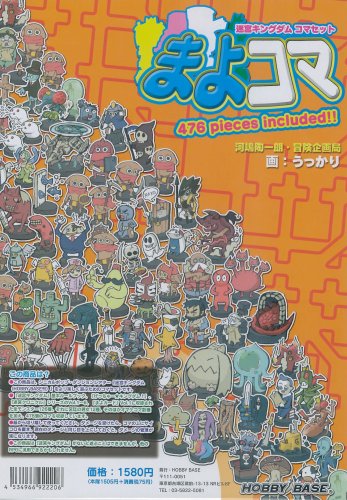
Tangentially, I also got the まよコマ/Mayo Koma set, which is basically a collection of over 400 cardstock tokens/pawns. I’ve talked a lot about MK’s Battlefield Map and how I used something very, very similar for Slime Story, and these are a well-made visual tool for showing your monsters and PCs on the map (including the basic stats for the monsters depicted on them as such). Unless Slime Story becomes incredibly big I’m going to have to settle for making PDFs (or maybe a paper miniatures font like S. John Ross’ Sparks line), but this is one of those things where WotC totally missed out on making an intensely useful tool for playing D&D, and is finally kinda sorta catching on with the stuff in the Essentials boxes.

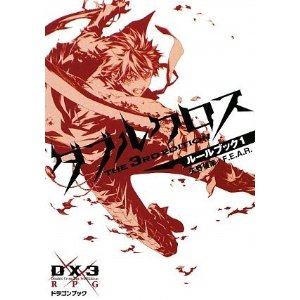
Double Cross 3rd Edition
Double Cross is a game that Andy’s been really enthusiastic about. I haven’t had time to do more than skim it, but it’s about teenagers with special powers in a hostile (contemporary) world. It’s in bunko format, so there’s not a whole lot of art, but what art there is is excellent.

SRS: Movement and Engagement

So, I finally sat down and read the 移動とエンゲージ (movement and engagement) rules in SRS (F.E.A.R.‘s house system), and it turns out they’re very simple and kind of interesting, so I thought I’d post about them here.

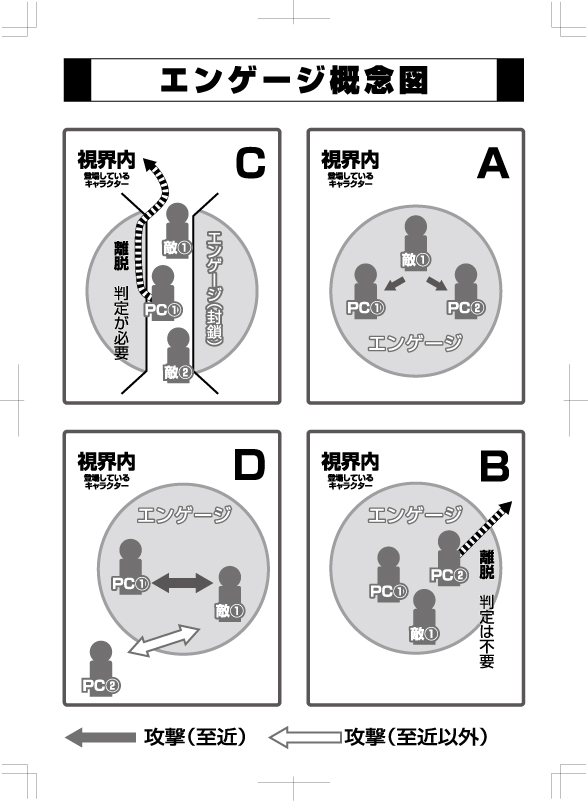
Here’s the diagram that they’ve included to make it a little clearer:

In SRS characters that are within melee range of one another are in an “engagement” (Figure A). If you’re in an engagement with an enemy, you have to take a Withdrawal action (離脱; Figure B), but that takes up a Full Action rather than a Minor Action like normal movement, so you can’t attack during a turn you move out of an engagement. You don’t normally have to make a roll to do a Withdrawal, but if you’re trying to do so through a confined space or in a place where it will otherwise be difficult, you’ll need to make a suitable check (what attribute depends on the particular SRS game, but generally something like Agility). Finally, ranged attacks can indeed go to and from outside of an engagement (Figure D). That’s a quick summary, but I don’t think I’ve really left anything out.

As the diagrams obliquely suggest, some of the books recommend using board game pawns to keep track of movement and engagements. All told it’s a very simple yet intriguing way to make positioning and tactics matter a little more, though I do wonder if they could do a little bit more with it. (That and in Arianrhod the Varna can take a racial skill that lets them do a Withdrawal as a Minor Action, which seems overpowered, though that may be my D&D4e senses talking.)