I’m getting fairly close to finishing the 4th draft of Magical Burst, which as I said will hopefully be the last major revision before publication. Naturally when I could’ve been working on it I instead blathered for 1600 or so words about working on it.
Thematic Stuff
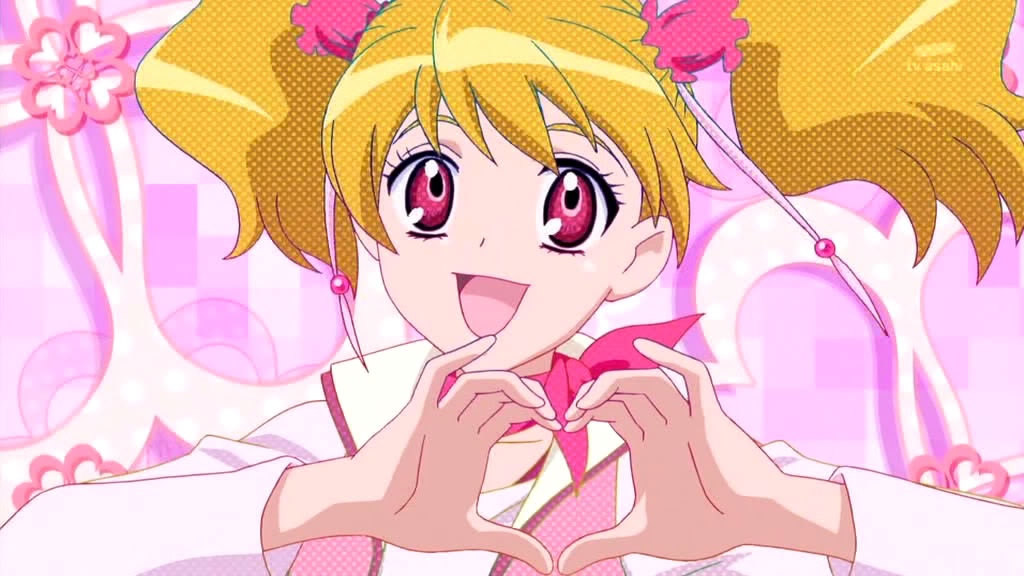
One thing that’s been on my mind a bit lately is the thematic underpinnings of magical girl anime. Anime is a weirdly skewed window into a particular culture, and magical girl anime straddles at least two distinct segments of that culture. There’s magical girl stuff aimed at little girls, which is more likely to have women in creative roles, but at the same time is extremely mainstream. Sailor Moon was the queen (and in some ways the originator) of this phenomenon, though Precure pretty clearly holds the crown right now (at least until Sailor Moon Crystal starts up). There’s also magical girl stuff aimed at adult male otaku, and while Madoka Magica is unusually restrained in a lot of ways (nary a panty shot to be seen for one thing), it’s still mainly a show very much by and for men. Where the show displays a lot of restraint, the merchandise and the fandom certainly don’t, and if for some reason you decide you want plastic figures of the characters in swimsuits, there’s official merchandise for you.
The shows aimed at girls are hard for me to fully take in. They present a lot of ideas about femininity, and those are grounded in a foreign culture and put through the filter of a show for little girls to watch in the morning. The actual style of storytelling is in my experience pretty similar to sentai shows, with the bad guys doing stuff that twists a characters’ desires in order to do evil. In magical girl anime stereotypically girly stuff like clothes and jewelry and dancing can be the focus a lot of the time, but they’ll also feature things like chess tournaments and martial arts where it fits the characters. Sailor Moon has the brainy Sailor Mercury and the tomboy Sailor Jupiter among the heroines, for example. As Lauren Faust put it, “There’s more than one way to be a girl.” Magical girl anime for girls tends to treat femininity as a virtue, but it presents many different kinds of femininity. It also has an aspirational streak, showing the characters striving for various notions of happiness and success. Sometimes this comes off as shallow and materialistic, and other times it can be pleasantly altruistic or otherwise noble.[1] I’m reminded of the thing that being girly isn’t anti-feminist, only the notion that all girls must be that way rather than being free to choose.
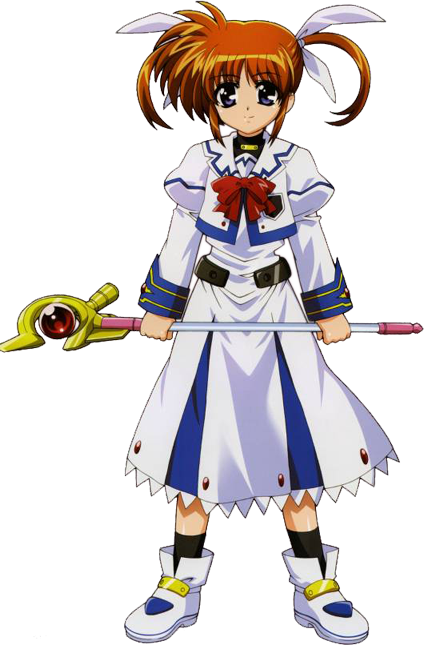
The issues with male-oriented magical girl shows are more apparent in titles like Lyrical Nanoha and Fate/kaleid liner Prisma Ilya, which although not without substance, have some pretty gross male-oriented fanservice at times, compounded by rather young characters. The stories tend to have very little to do with femininity, and instead play out a lot more like other genres of anime. Nanoha has a female protagonist and most of the major characters are also female, but in a lot of ways it’s more like an unusually succinct shounen fighting series. There’s a greater than usual emphasis on themes of friendship in Nanoha, but then that’s true of, say, One Piece as well. Friendship and striving to accomplish things and so on are really important values in Japanese culture, and very popular among boys.
Magical Burst belongs to the Madoka camp more than the Precure camp. For starters, the game is by an adult male designer, and if I were going to make a game aimed at anything like the girl-oriented magical girl anime and its original target audience, it’d look very different.[2] I’m certainly not going to put deliberate fanservice into the game, but I have no illusions about what gender the majority of the audience is going to be. It’s also an RPG, which means that a certain portion of the thematic content comes from how the particular gaming group comes at it.
I also took some influence from Superflat. Superflat is an art movement from Japan that’s a bit pretentious and hard to explain, but the core of it is exposing the absurdity of certain aspects of Japanese culture, in particular expressions of powerlessness and the lack of distinction between product art and fine art. As a result, Superflat art shows include a lot of outright bizarre stuff that uses imagery from anime and such. Magical Burst’s use of a zillion d66 tables that put a kaleidoscope of weird images and tropes in front of you is very much from Maid RPG, and even more so Magical Burst asks you to take a disparate mass of images and try to make some sense out of it. Although it doesn’t perfectly line up with Madoka Magica (on purpose), I want it to help foster some of the feeling of strangeness I and doubtless many others felt in the first episode when Madoka and Sayka find themselves inside a witch’s barrier. Looking at my introduction to the setting I see a lot of stuff about alienation, about lacking answers, which I think has a bit to do with how I feel about real life. So there’s that.
The world is a vast place, but although mankind as always told stories of magic, to their tribes, to themselves, to the night sky, men have never held it in their grasp. Magic is real even so. Magic is dangerous and terrible and beautiful. Magic is our only weapon against magic. Perhaps someday the world will forgive you for using it, but for now it hates you for it, hates your good intentions as well as your base desires. That is the world you will live in, a magical world.
Rules Stuff
On the design front, I wound up doing some major streamlining of the Fallout rules. Naturally this involved making a bunch more tables, since among other things I decided to make d66 tables for the two levels of Distortion type fallout. (My favorite particular entry being “Small candies rain down from the sky.”) A big part of the point of having tables is to provide inspiration so that you’re less likely to get stuck trying to think of something on the fly, so it made sense to have tables rather than just giving a handful of examples. It was really fun to come up with Magic distortions, and very difficult to come up with ones for Heart and Fury that would be impactful but not too out there. That also means that so far the game is up to about thirty d66 tables in it. So yeah. I also revamped the Change tables, trying to keep them from being overt fetish fuel, overly contextual, or any number of other problems. They’re still really out there, but hopefully better overall. I’m definitely liking how the Fallout rules are looking in general.
The three Specializations and the related Magical Talents are now done, albeit in a first draft kind of way. The Witch, which specializes in Attack, was probably the easiest to design, since “does more damage” is a pretty simple thing to accomplish. For the Knight (Defense) I really want to make sure such characters can be active enough to be fun to play, and absolutely not MMO tanks. For the Priestess (Support), D&D4e’s leader classes provide a lot of inspiration, though there’s also potential for doing some interesting things that are specific to this game, like playing around with Overcharge. I want the roles to be relatively flexible, with the ability to do some stuff outside your specialization’s role. The Priestess has a better healing talent, but anyone can get a healing talent, for example.
The big thing I’m trying to figure out right now is how to work the Sorcery rules, which essentially means coming up with an improvised magic system (or a stunting system if you prefer). The core idea at the moment is simply that you make a Support challenge with a target number depending on the effect you want, plus some stuff to make your life interesting if you fail or don’t succeed quite enough. Threading the needle of making something that can cover a huge variety of possible magic effects without being too complicated is proving a really interesting challenge.
It’s hard to say how soon I’ll get it done–I certainly don’t have any shortage of other things I need to get done, not to mention my day job having some tumult–but assuming I can untangle the remaining knots there’s not too much left to do. From there I’m hoping to launch into some pretty intensive playtesting, because I feel like I need to really learn the ins and outs of the system I’ve made, make some important refinements, and collect and communicate knowledge of how to play. Also, it’ll motivate me to get back into role-playing proper, which I haven’t been doing anywhere near as much as I’d like due to scheduling issues.
[1]Sentai shows are very similar to magical girl anime in this respect, which makes sense since they’re the early morning show for boys. Some day I really need to finish my Tokyo Heroes RPG, which covers both sentai and Sailor Moon style magical girls.
[2]My friend Aaron Smith is in fact working on a game aimed at more traditional magical girls, and it’s looking quite good and totally different from Magical Burst.


![IMG_0981[1]](https://yarukizerogames.com/wp-content/uploads/2014/02/img_09811.jpg)


 Beginning in 2014, Star Line Publishing will be taking over handling
 Yaruki Zero Games