Analog DLC?

The Halo 2 Downloader, featuring its first fou...
Image via Wikipedia

This started as an offhand comment on Twitter, which ballooned into a discussion (even though Twitter isn’t a good medium for discussion), so I’m expanding it into a blog post to unpack some. In video games downloadable content (or DLC) has become at turns a buzzword, a thing fans demand, and a source of controversy. It’s getting to be a pretty common thing, though it’s obvious that some developers are better than others at figuring out what the heck to do with the possibilities it affords. I’m wondering if RPGs could benefit from something resembling video game DLC. Needless to say, this line of discussion presupposes that someone is actually going to do it right, providing useful, quality content at a reasonable price, without gimping the primary product. And we’re talking about something at a scale where it would in fact be different from merely offering sourcebooks and adventure modules, since the RPG industry is already well-acquainted with that (and in a sense was way ahead of video games).

boxluminesLIVESo, the idea is to do “micro-supplements” for an RPG, preferably electronic. This probably makes more sense for a game that has relatively little supplemental material in the first place, since it can actually stand out more from the rest of the product line. If Wizards of the Coast releases a new race as a $3 PDF, it’s going to get lost in the shuffle of their dozens of hardback supplements and monthly truckload of D&D Insider content (which is more the niche something like a single race fills in their business), but if an indie publisher does one or two of these, they could be the one or two supplemental things that exist for the game in total. On the one hand, supplements inevitably sell less than core rulebooks, but on the other hand a PDF micro-supplement that costs $4 or less is squarely in impulse buy range, gives the customer nigh-instant gratification (rather than waiting for shipping or making a trip to a store), and doesn’t take a huge investment on the part of the publisher to create. Although Microsoft’s implementation hasn’t been perfect, part of the success of their “marketplace” stuff is simply that you can buy stuff using your Xbox 360 controller sitting on a couch, and use it right away. Now all three major game consoles have that going for them.

apelord-150One Bad Egg‘s 4e micro-supplements range from about $2.49 to $8.99, with the right amount of heft for the price, and really distinctive content for a game with minimal third-party support. Ronin Arts literally has over 200 PDF products out there, and they have dozens of d20 OGL PDFs for sale, starting at $1.50. I don’t know all that much about Ronin Arts’ offerings, but OBE seems to be the #1 producer of 3rd-Party D&D4e content, and their stuff stands out both in terms of quality (with Green Ronin and others skipping 4e, a lot of the other GSL offerings are the kind of stuff that remind me of the lameness of the 3e OGL glut[1]) and creativity (since they’ve tended towards a very gonzo pulp flavor of D&D).
1847-thumb100It would also be a mistake to assume this only applies to things that cost money. 3:16 has two free supplements as part of free electronic magazines (the Collective Endeavor Journal and Page XX), and it’s not hard to see how this both gets 3:16 fans looking at the magazine and gets the people reading the magazine for other things looking at 3:16. Likewise (although I wish we could’ve gotten it out sooner) the free bonus scenarios for Maid RPG hopefully are not only letting people who have the game do a little more with it, but also letting people who don’t have it get a taste of what it’s like. (Which comes back to the whole thing about selling an experience we talked about in the last podcast.)

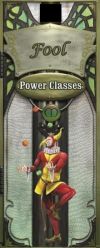
Now, the flipside to all that is that with both video game DLC and RPG micro-supplements people have generally had a hard time figuring out what the hell they were doing. Video game DLC has at times included unbridled attempts to squeeze more money out of gamers (such as charging to unlock content already on the disc), or just kind of lame and slow to come along (anyone remember the map packs for Unreal Championship?). Mongoose’s “Power Classes” pamphlets likewise seem to have gotten onto FLGS shelves only to be greeted with an emphatic (and probably well-deserved) “meh.” Content needs to be compelling to the user/customer, no matter what format you’re offering it in. If it’s crappy, or for a game they’ve already moved on from, no one’s going to be interested, but that’s just common sense.

coverDaughterOfNexusWhite Wolf is in fact doing something in the way of mini-supplements with their “Storytelling Adventure System.”[2] These are very much like adventure modules for their various games, but they’re sold as inexpensive PDFs (ranging from $1.49 to $8.99, but $6.99 seems to be the standard price). This isn’t quite what I’ve been blathering about here, but it’s interesting in its own right in that it’s something of a solution to the question of how publishers can continue to offer actual adventure scenarios. Good pre-written adventures are very useful to the people playing the games, but their profitability is not generally commensurate with that. WotC’s solution to this is elaborate modules with glossy color maps (which are useful in general for D&D) that list for $24.95. If the Amazon book sales rankings are any indication, these do indeed sell an order of magnitude less than core products, to say nothing of the Player’s Handbook, but they are apparently selling enough to justify their continued publication. Of course, especially for something like Exalted (which has fewer tangible components to pack in), it makes sense for the players to have an adventure be a PDF you can print out, run, and recycle afterward (or just keep on a laptop, with no need for a hardcopy).

Mouse HengeThe thing that probably best exemplifies what I’m getting at here is, unsurprisingly, from Ryo Kamiya. Tsugihagi Honbo occasionally does very short doujinshi things for 100 yen, and one of them had rules for creating mouse henge in Yuuyake Koyake. This involves a mere 4 pages of material in all (with one illustration) and while the game doesn’t need a seventh type of henge, adding in mice adds some really interesting new possibilities to the game. As a huge fan of Yuuyake Koyake and something of a completist, it bugs me a little that I don’t have a copy. ^_^; Although Tsugihagi does these on paper, particularly in the American market it’d make more sense to have something like that be a PDF.

Anyway, I’m not really going anywhere in particular with this, just throwing out an idea and places it might lead.

[1]I do really like Alea Publishing Group’s Feudal Characters: Noble though.
[2]There’s also something called ExXxalted: Scroll of Swallowed Darkness that costs 99 cents for the full version, but we won’t dwell on it.

Reblog this post [with Zemanta]

Yaruki Zero Podcast #10: Wild Blue Yonder

ykz_010

In this episode I’m joined again by my friend Jon Baumgardner to talk about Blue Ocean Strategy and how it might be applied to designing and marketing small-press RPGs.

Yaruki Zero Podcast #10 (43 minutes, 14 seconds)

Show Notes

  1. What is Blue Ocean Strategy?
  2. Innovating the Medium
  3. Innovating in Marketing
  4. Addendum: Overcoming Objections
  5. Any questions you’d like us to discuss in the future? Please comment!

This podcast uses selections from the song “Click Click” by Grünemusik, available for free from Jamendo.com. If you like the song, consider buying some CDs from Nankado’s website.

somerights20en

Slime Story: Conflicts Redux

A combination of reading Agon, re-reading Meikyuu Kingdom, and thinking about some of the little tricks we’ve come up with in my group’s D&D4e campaign have inspired me to get back to work on Slime Story at long last. The major stumbling block was getting the conflict rules to work how I wanted them to, and I think I’ve got that about figured out.

Slime Story: Kelly

Before I had a “footing” system, where each character in a conflict is in Forward, Middle, or Rear footing (or in some special circumstances Off-Balance or Ambush footing), which was basically a trade-off of offense for defense or vice-versa. The thing is, once you’ve set your footing, there’s not much motivation to change it, which kind of defeats the purpose of having a map and character tokens and such. Meikyuu Kingdom and Agon both use abstract range maps. MK calls it the “battlefield,” while Agon has a “range strip“. (And apparently Traveller had something similar too, so it’s a much older idea than I’d originally believed.) This lets me do some neat stuff with range, movement, and positioning, and in particular, outnumbering the enemy within a given position on the map gives characters an advantage. I think this will help provide about the right level of tactical elements, enough to make encounters interesting in their own right, but not so much that they eat up too much time.

And, straight from Agon, the social conflict rules are basically the combat rules but with the map/positioning elements taken out completely. Much simpler and IMO altogether better, since having positioning in a social conflict is getting a little too abstract for my tastes.

The other important thing I’ve come up with is the “action stack.” This is my attempt at doing something more interesting with initiative, an area that has seen surprisingly little innovation over the years. In order to simplify combat in my group’s D&D campaign, we’ve taken to having a combat card for each character and monster with the relevant stats on it. Once the initiative rolls are in, the DM just arranges the cards in order and cycles through the stack of cards as needed. This in turn lets me do interesting things with the stack of cards that would be awkward otherwise, including meta-effects that change a character’s spot in the initiative order. It’s also made it easier to keep track of “reactions,” a class of actions that interrupt regular actions; your card gets turned face-down in the stack, and when it comes up again it’s righted, but you don’t get to go until it comes around face-up again.

On the whole, I’m feeling a lot better about how all of this stuff is coming together, though of course it’s continuing the pattern of tearing out some bits of the system and keeping others. (But, the bits getting discarded are becoming smaller and smaller.) On paper, it looks like it’s achieving the right balance of tactically interesting and intuitive to play, even if it does involve a lot of fiddly bits. But, if I can get the encounter and conflict rules straightened out, I can finally write up the talents and get the game ready to properly playtest.

Maid RPG: One Year Later

Maid RPG (English Version) Front Cover

Today marks the one-year anniversary of the release of Maid RPG in English. On August 14, 2008, Andy and I were at Gen Con Indy, standing in an oddly-placed booth shared with Khepera Publishing and Aetherial Forge, with copies of Maid RPG and a picture of Hard Gay. And that was after we slaved away for many, many months doing the translation (oh god, the translation), editing (which wasn’t as good as it should’ve been) and layout (which was excellent).

Maid RPG wound up being the first Japanese tabletop RPG ever released in English, which as Andy told people at the con is a source of both great pride and of great shame. (Tenra Bansho Zero was supposed to come out first, by a considerable margin, but it’s proven to be a monster of a project.) At Gen Con I got to know Andy better, shake hands with a dizzying array of people whose names I’d heard online, and see the book we’d all put our blood, sweat, and tears into sell out by Sunday afternoon.

Way of the Maid
It has most definitely been a long and strange journey. Some bizarre impulse made me think that doing a translation of Maid RPG was a good idea, and we ran with it. It’s created controversy, ranging from reasonable complaints to a bizarre conspiracy theory, but mostly it’s been a really damn fun game to play. The first RPG I ever owned was Steve Jackson Games’ Toon: The Cartoon Roleplaying Game, and Maid RPG has the same kind of zaniness, but with its own distinctive otaku culture edge. I’ve run it at four different conventions, played it many times with my local friends, once with Ben Lehman and his crew, and once with my sister’s friends in New Mexico, and it has never failed to be fun. On top of that, I keep spotting people starting up games on forums, and over on the Something Awful forums they went so far as to have an alcohol-fueled Skype game.

Since its debut we’ve done some considerable revisions to the text, and generally struggled to keep it in stock at IPR–as I write this they’re nearly out of copies. Again. (Plus it took the better part of the year to finally get those extra scenarios out as a PDF.) It definitely hasn’t made us rich, but as this small press RPG stuff goes it’s exceeded all expectations. Along with typical RPG sites, people were talking it up on 4chan and Gaia Online (and a friend of mine organized IRC demo games through 4chan!). There are literally over a thousand people who have Maid RPG in their hands in one form or another, so when all is said and done I’m extremely glad I had the crazy idea to do this thing back in 2007. It’s even showed up in some Japanese game shops now, so that the madness has gone full circle. I can only hope that our future endeavors enjoy some semblance of this kind of success.

Casting to the Pod
In the near future I’ll be roping Andy K. and Ben Lehman into doing a “Maid RPG Roundtable” podcast, where we’ll discuss the game itself, what went into publishing the English version, and more. Please feel free to comment if you have any questions you’d like us to address!

Thank You All. Seriously.
When all is said and done, I owe a lot of thanks to a lot of people for making this happen. Andy more than anyone, but also Ryo Kamiya of course, Ben Lehman, my gaming group, and all of the awesome fans around the world.

Announcing Witch Quest!

witch_tarot

I haven’t been all that inspired to work on my own projects (though I did have some nifty ideas for Slime Story the other day), so I’ve been translating various things of interest, and I’ve hit on a project to tackle to kill time.

Witch Quest is a Japanese RPG that originally came out in 1991. It was designed by Adventure Planning Service and published by Oozora, which mainly specializes in shoujo manga. In 1995 they released a “share text” version, a set of free text files with the complete rules. After it went out of print, a doujinshi circle called Majo no Kai bought the rights and put out a revised version in 2001. My aim is to produce an English translation of the share text version and make a simple but pleasant PDF. It’s not the most recent, but it is free and complete.

The game is an “everyday magic” RPG. Players form pairs where one is a 13-year-old witch, and the other is a 1-year-old cat. Together, they solve magical problems and generally help people out. It’s very much in the vein of Kiki’s Delivery Service.

The share text consists of two books. Book I contains two full replays and two scenarios, while Book II contains the actual rules. Of both preference and necessity, I’ll be tackling Book II first. I need to nail down the game terminology and understand the rules to have any hope of translating a replay, and the rulebook part is more interesting to me anyway. I’m not desperate for assistance, but I’d welcome help with the translation if anyone with the requisite skills is so inclined, and I could use some help with layout stuff, especially when it comes to making a character sheet.

A lot of the rules are fairly traditional, and characters have attributes and skills and such, you roll dice to figure things out, and there are even hit points. One of the more interesting things is the “Witch Tarot” the game comes with. It’s a set of customized tarot cards that you use in character creation, and there are also instructions for using it for fortune-telling. One amusing thing with the share text is that, as with the character sheets and everything else, it includes text-based cards for you to print out.

As it’s a simple matter of cut and paste, I’ve made a PDF of the text-based cards (a PDF so those the folks who don’t have Japanese text support installed can see). The first four pages are the actual cards, and the last three are pages of the three different backings. If you want to make a set, print out pages 1-4, flip your paper around, and pick page 5, 6, or 7, whichever you like more.

Text-Based Witch Tarot Cards (PDF)
Japanese Share Text (LZH Archive)

Yaruki Zero Podcast #9: Everyday Magic

ykz_009

In this podcast I give an overview of a talk between Ryo Kamiya (designer of Maid RPG and Yuuyake Koyake) and South (current publisher of Witch Quest) about “everyday magic” RPGs that appeared in a doujinshi they collaboratively produced called “Doko ni Demo Aru Fushigi.” They discuss the challenges of heartwarming, nonviolent RPGs.

Yaruki Zero Podcast #9 (20 minutes, 9 seconds)

  1. Introduction
  2. Games Without Combat
  3. Assembling Scenarios
  4. Conventions & Catharsis
  5. The Limitations of Classes/System Does Matter
  6. Kamiya’s Early RPG Experiences
  7. A Fantasy Countryside

This podcast uses selections from the song “Click Click” by Grünemusik, available for free from Jamendo.com. If you like the song, consider buying some CDs from Nankado’s website.

Very awesome caricature of Ewen courtesy of the talented C. Ellis.

somerights20en

Yuuyake Koyake Supplement: Kore Kara no Michi

korekara_cover1_200

The Sunset Games website now has some info about Kore Kara no Michi, the third and final Yuuyake Koyake supplement, due out this September. According to the description, it’s going to have one new character type, additional rules, and three scenarios, in a 64-page book like the prior supplements. As I’ve reported before, the book is indeed going to be about playing as humans. Here’s a quick translation of the description on the website, which looks very much like it’s going to be the introduction from the book:

It starts with one step.

First, you’re reading this book.

Thank you.

If you’ve never read Yuuyake Koyake and you’re reading this book, please see if you can borrow that book from a friend to read it. That book will let you become a henge and tell stories in the countryside. You need to know about that, or even if you read this book nothing can begin. How you begin the stories, and how you finish them, are not written in this book.

Yes, this is the final Yuuyake Koyake a book. It represents the end of Yuuyake Koyake, at least for now. Previously, there were Yuuyake Koyake, Mononoke Koyake, and Hitotsuna Komichi. Together, these tell you all about the mysterious inhabitants of the town. These prior books tell you the secret of how to become these beings, and tell stories about them.

Henge, mononoke, and elder henge. If you’re reading this, have you enjoyed becoming them and running all over town? Have you become them, and used mysterious powers that a person cannot? Have you spread more smiles around the town? If so, that makes us very happy.

You’ve become animals or monsters, or perhaps the narrator. Hopefully you’ve come to see the town from a different point of view. How people live, how things are, feelings, and surprises. You’ve given many things, and received many others.

That is the road that has led you here.

This book is the road from here.

What do you think of the town full of people, the town that you’ve been watching from the outside? You seen it as a henge, but what about as yourself? Yourself as a child, as you are now, or when you’re older. Was it as you really are, or as you wish to be?

The road that has led us here. You’ve seen the town as a henge, as a mononoke, as one who has watched the town since olden times. Now, let us take a first step onto a new road. It is not path either of us have walked before. Even the henge of the town have not walked this path before. This path is here for you to move ahead. It will not open until you do.

You can participate in stories as a normal person. People don’t have any wondrous powers. They simply have their feelings. But, their feelings, and the fabric of their connections to each other, are the most important thing of all.

Please remember, these people’s feelings created the town. Their feelings accepted the henge. The henge and the people joined hands. Up until now, the henge have been helping the people, but really, they’ve been supporting each other. People and henge, let’s walk together, one step at a time, on the road from here.

Now, gather your courage. As you’ve walked this road, you were never alone, and you never will be.

Ewen vs. Slime Story

Slime Story continues to be a game that fights against its own completion every step of the way. I tried to do a very simple test of the conflict rules by myself–let’s have Phoebe and Matt have an argument!–and it totally fell apart. But, as has been the case since the beginning, each step leaves me with a bit more usable stuff.

3cb76b8983e5ac16b6ecf2ab27fb7dc5
(Joe Hunter Archetype illo by StreyCat)

Aside from the fact that just because stuff sounds good on paper doesn’t mean it’s actually going to work (something every designer knows, or will learn very quickly), there are two Slime Story specific things I noticed:

First, making players spend their one action for the round on changing footing doesn’t work with the game as written. It works with the range map in 3:16, but then 3:16 works quite a bit differently. This led me to have “Full Actions” and “Maneuver Actions”, and you can take one of each (or two Maneuvers) during your turn. This lets players change footing before (but not after!) attacking, and lets me put some other nifty things into the game. Of course, it also makes the rules a little more baroque, and a bit more like 4e. This will hopefully alleviate the overwhelmingly optimum status of planting oneself in one footing and making an attack every round.

Secondly, the death spiral sucks. I originally had it as a -1 penalty for each point of Stress a character takes, but when you’re rolling 2d6+Attribute (ranks range from 4 to 10 or so for starting characters), getting hit with a -3 penalty from taking one hit is just too damn much. I need to find the right balance between giving players an incentive to avoid damage, and punishing them too severely for taking it.

Once I get the conflict rules down, I’ll have the proper chassis on which to mount the rest of the game. Probably the single biggest reason I’ve been procrastinating on working on the game more is that I have to get this one highly mechanical and game-y part of things all nailed down before I can really go any further. The Talent descriptions and monster writeups all depend heavily on interacting with the conflict rules, so I’d be wasting my time if I tried to work on them, even if they’re potentially more candy-like and interesting.

In Other News: Shinobigami
I special-ordered a copy of Shinobigami (“Ninja God”), published by Role&Roll Books, and designed by none other than Toichiro Kawashima, designer of Meikyuu Kingdom and Satasupe. The game is sold in the form of a small paperback, and it’s uniquely Japanese in that the book starts with a 160-page replay (littered with explanations of the game), and then has about 60 or 70 pages of actual rules. The game is about modern-day ninja with over-the-top powers having epic battles. I’ll be posting more about this when I’ve had a chance to read through it, which will probably take a while. I’m especially intrigued by the “Velocity System”, which involve a chart that goes from 0 (Mundane) to 7 (FTL).

Revenge of the Random Thoughts

Deep Blue Sea
The blue ocean strategy podcast is taking a bit longer to put together than I had hoped, in part because, when it comes down to it, it’s potentially a very broad topic. The thread I started over at Story Games has generated over 80 posts over the course of two weeks, and produced some very interesting discussion, that has in turn helped me better figure out what to do with the podcast. In particular, I think that while RPGs have done a lot of innovation in terms of what the medium can do, there hasn’t been nearly as much innovation in how people market and sell those games. (Though needless to say, design and marketing can and probably should inform one another.)

Four Ee
D&D4e is a great game for campaigns, but it’s really not that great for one-shots. I’ve yet to play in a con game that didn’t run for 6 or 7 hours, even with the party focusing on getting through the encounters. A 4e character has enough of a learning curve that it’s not worth playing one for just one session.

I got a copy of the new Eberron Player’s Guide, mainly because I wanted to see what 4e could do with a fantasy setting less generic than Forgotten Realms, though frankly it’s not quite wacky enough for my tastes, which makes me want to get around to working on the Nine Towers setting I’d tentatively started a while back.

Potential Spaces
At Webstock 09, Ze Frank gave a talk on “Potential Spaces”. Although he’s a very talented guy himself, where he really shines is his ability to create spaces for people to contribute, and over the course of his 50-minute talk he gives several fascinating (and uplifting!) examples. Early on in the video he also talks about the relationship between the rules of a game and what actually happens, and this is something every game designer should be thinking about.

Dragon Oracle
As kind of a short side project I’ve started trying to design a (non-collectible) card-based RPG. It’s a simple fantasy game, tentatively titled Dragon Oracle. I’m trying to stick to using two decks of 54 cards (a Hero Deck for the players and a Dragon Deck for the GM/Dragon Master) and as few other materials as possible (which is why it wound up being non-random), though I ended up having to allow for simple character sheets. The number of cards limits the number of classes for the base Hero Deck to 3, which will be Fighter, Mage, and either Thief or Acolyte (priest/cleric). I’m not sure where I’m going with this. If it works out exceptionally well I may see about POD printing through Guild of Blades, or try submitting it to game publishers, but it may just wind up as a free PDF, if that. Right now it’s kind of stalled, partly because of the dilemma over class choices (though I’m leaning towards putting in the thief and letting the mage heal a bit, so it could be Fighting/Magic/Trickery rather than Fighting/Magic [arcane]/Magic [holy]).

Sunset +3
Over on the Sunset Games blog they’ve posted up an announcement and cover image for the third and final Yuuyake Koyake supplement, Kore Kara no Michi (“The Road From Here”), which as I understand it will be about playing as humans. Ike‘s art is awesome as ever.

Slime Story
I haven’t been getting much done on Slime Story, but I did get the commissioned art for the game’s archetypes:
Karate Star (Matt)
Suburban Ninja (Phoebe)
Joe Hunter (Doug)
Custom Character (Rita)
Dedicated Archer (Christine)
Nerdy Alchemist (Kenny)
Monster Lover (Kelly)

Dragon Ball Zeeeee
I have a vague notion of trying to put together a DBZ game loosely based on the Budokai Tenkaichi (or “Sparking!” in Japan) video game series.