Category Archives: projects

More on Magical Burst

The other day someone on 4chan’s /tg/ board pointed people to Carly Ho’s Magical Burst character generator, the result being a rather glorious thread where people used the generator and interpreted the results. I wouldn’t even know where to begin pointing out the amazing stuff in the thread, but this was suitably funny and twisted:

Onigawara Yuri
Pretty Strawberry Lovely Yuri

>Already feeling that pain in my legs, better check my blood sugar.

What kind of girl are you?
Sickly Victim

>Eh. Guess I SHOULD check that blood sugar alright. And stop with the strawberries – it fucks with the chemo.

What convinced you to make a contract?
I realized I’m tired of feeling helpless.

>What, no deep spiritual satisfaction in sitting in that hospital bed being miserable?

What is your wish?
I wish I could be my old self again.

> I assume that she’s referring to the self that has a good chance of living to adulthood.

Weapon
Dagger

>Damn, bitch is hardcore.

Magical Element
Radiation

>SEE HOW YOU LIKE CANCER

Magical Power
Analysis
By magically analyzing things you can discover secrets, and locate weaknesses.

>Say, you seem to have a genetic predisposition to developing leukemia, don’t you?

Costume Elements
Omega

>DOOM AND GLOOM, I TELL YOU. DOOM AND FUCKING GLOOM

Crisis
I’m hopelessly attracted to someone I probably shouldn’t be.

>But… sempai… we’re both girls, right?…

More creepy lesbian carcinogenic goodness!
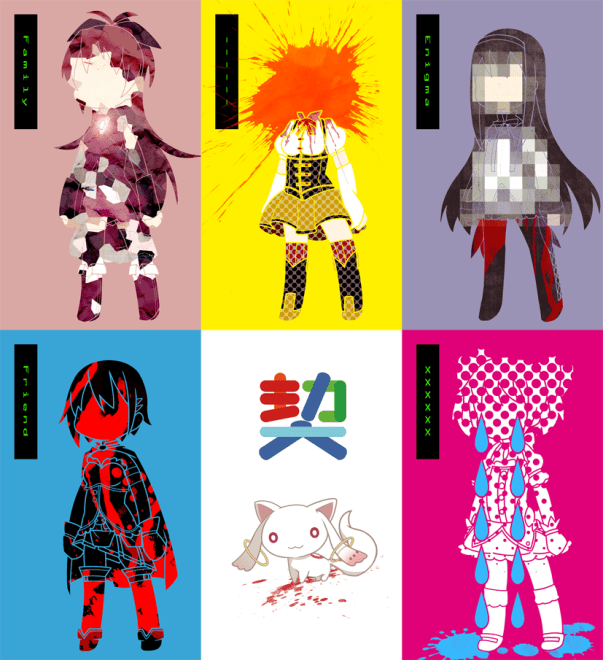
And that’s just the tip of the iceberg. Anyway, with NaNoWriMo coming up I’ve been trying to shift out of card game mode, and this inspired me to get back into Magical Burst. It’s incredibly gratifying to see people not only enjoying but being creative with something I made. The magical girl creation tables are this mass of cliches and strangeness, and at times the random results come together in the most amazing ways, doubly so when people as creative as some of the /tg/ posters are the ones interpreting the results.

One thing about me is that I have a tendency to hyper-focus on one creative project or area, and the amount of time I’ve been putting into Channel A and related projects is kind of ludicrous. I have a thing I do where I carry around a notebook to write down whatever comes to mind, and then I’ll periodically write down a list of all my projects. I never leave Magical Burst off the list,[1] but I think I had put out of my mind how messed up it was. I tend towards a very shiny aesthetic, but I also go to some pretty dark places sometimes. Going back to that place was a little bit of a journey, and I had to put on some Nine Inch Nails to set the right mood. (Did I mention that the sample youma in the book are going to be based on the 14 tracks of “The Downward Spiral”?)
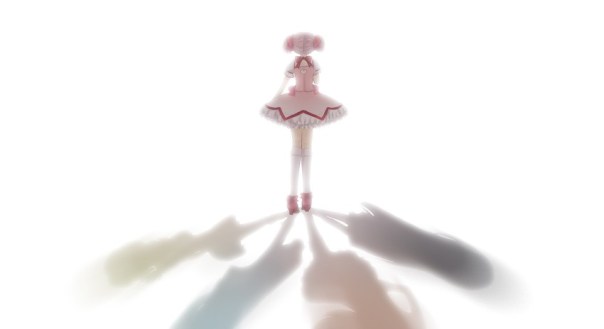
I don’t have much of anything to report in terms of changes to the game that I haven’t talked about before, basically because I got stalled and am picking up where I left off, with a bunch of things pretty well planned out but not implemented yet. Today working on Magical Burst was pretty much the extent of my productivity,[2] and most of that was tweaking and expanding the text and working on filling out some tables that were incomplete. Entirely too much of my life is about filling out tables and similar lists of discrete items these days. But anyway. One of the major things I’m trying to work on is more procedural clarity, especially when it comes to setting up a campaign. It’s one of those things where RPGs habitually leave you to muddle through yourself, and I know I appreciate it when a game gives advice on how to achieve its intended tone, especially when its something like this where you have to work at it.[3]

I did already finish up the Instant Magical Girl section (here’s an example of it in action), which now covers pretty much everything for character creation, including a new table for rolling up finishing attack names. It would be hard to pick a favorite from the tables, but the Crisis table is definitely up there. “Crisis” is basically my word of choice for what Ron Edwards called a “Kicker” in Sorcerer, and the table is appropriately full of stuff a character can’t ignore. To me that’s the essence of what makes Magical Burst–and Madoka Magica–so compelling.

Update Stuff


[1]I’ll do that sometimes with, say, Tokyo Heroes. That’s a game I sincerely do want to work on again some day, but that I’ve pushed so far on the back burner that it’s fallen back behind the stove.

[2]Unless you count making a batch of “slutty brownies.”

[3]Like its source material, Magical Burst is meant to have a heavy, oppressive atmosphere and be about characters dealing with some really scary shit. It’s been my experience that that’s exactly the kind of thing that gamers have a natural tendency to use humor and generally step out of character in order to back away from. I really want someone to formally study this phenomenon, but that would require the kind of people who have the expertise and funding to care about tabletop RPGs.

Channel A Update

Channel A is just sort of rocketing forward, in part by virtue of it being fun and relatively easy to work on and a low-commitment game to playtest.

I put together a prototype with Photoshop and got it printed through The Game Crafter. I’m not a pro designer by any means, but sometimes I forget just how much of that sort of thing I learned in college.[1] I had been thinking in terms of it being an entirely temporary thing before Clay made the real cards, but people’s reactions to the prototype have been so good that it’s going to at least be a a starting point. Of course, one of the things I had to do was to make sure I was using fonts I could actually use, which meant a lot of checking, replacing (FontSquirrel is amazing by the way), and a few purchases/donations. In the future I’m going to try to keep the number of fonts I used on any given project in the single digits, because wow. =_= Making lots of little logos was kind of fun, but drags on after a while.

Overall TGC’s backend for putting games together is excellent. It has a lot of touches that make perfect sense, but which it would be entirely too easy for a system without the same care to leave out. For example, when you make a deck of cards you can upload a back and then batch upload the files for the faces. Being able to do the cards in individual files (rather than having to put together sheets of 18) is a godsend too. Proofing is a little time-consuming if you have lots of cards, though it’s really good for spotting potential problems with things where the cutting is more involved, like tuck boxes. The big stumbling block for me is the price, and I’m going to have to find other avenues if I’m going to sell it seriously.

The one big change I made to the rules is in how scoring works. The voting card system works pretty well, but it’s easy to get ties, especially if you have a smaller group of players. When playing with with Ben Lehman and Sushu and Jono Xia (and Jono had some kind words about it afterwards), Ben came up with the idea of breaking ties by making a hand of one O and the rest Xs and letting tied players pick at random until someone gets an O and wins the round. In the middle of the night I hit on the idea of making an uncontested win worth 2 points and a tie worth 1 point. I really like this solution for a variety of reasons. In particular, it’s quick and it just feels more fair.

Because I’m insane and have a streak of creative masochism, I’m already working on two expansions. Each one will be 108 cards in a tuck box, and I got Dawn to do two more pieces of art to go with them.

  • Second Season: This is a collection of 108 extra Title Cards. 25 of these are new “Star Cards,” which let you put in any one word from a category (flowers, fruit, mythic creatures, types of songs/poems, etc.)
  • A-Soft: This gives you a variant game about pitching video games instead of anime. It includes 40 Genre Cards (that cover different video game genres) and 68 video game themed Title Cards.

I have enough leftover ideas for Title Cards to get a good start on a third expansion, plus I have an idea for an expansion called “Japanimation Fever” or some such aimed at the style of anime parodies as done by people who know text to nothing about anime,[2] but I’m mostly shelving Channel A so I can get other stuff done.

Right now the plan is to put the game and the two expansions up for sale on TGC, mainly for some friends who want sets to take to conventions and such. The quality you get from TGC is pretty good, but it’s in the nature of POD card printing that it’s going to be a bit expensive to print 310 cards. I’m thinking about an eventual Kickstarter or otherwise doing a proper print run to sell (and thereby get the cost below $35 for a base set and $15 for the expansions), but that’s a ways off, and I need to get Golden Sky Stories dealt with first. I’m also going to put together an update PNP version of Channel A, since the philosophy of having a free basic version and a spiffy commercial version seems to work pretty well.[3]

[1]Also, I know Japanese! :V
[2]Though I’m not really sure how to put myself into that mentality anymore, apart from mentioning tentacles a lot.
[3]Also, check out Jens Alfke’s set for printing on Avery perforated cards.

Dragon World Hack v0.2

I’ve posted about it a good amount already, but Dragon World is my 90s comedy fantasy anime hack for Apocalypse World, a very silly fantasy game. Dragon Half and Slayers are major inspirations, but just about every fantasy anime I’ve ever seen figures into it a bit, along with Discworld and the sillier parts of every D&D campaign I’ve ever been in.

This is the “Hack” version of the game, so to play you’ll need to have a copy of Apocalypse World, or at least a good knowledge of how AW works.

Here are the major changes I’ve made from the previous version:

  1. Leveling Up: I replaced marking experience with leveling up, which characters can simply do once per session between scenes.
  2. Guts Points: PCs now have Guts points that they can spend to avoid Falling Down (or to affect die rolls), but every time they do they have to make a roll to avoid having a Stress Explosion.
  3. Wealth: The group shares a special Wealth stat that can fluctuate up or down, and which they get to roll on when they buy stuff.
  4. Story Threads: Instead of connections/History, PCs now have Story Threads, which encompass other PCs as well as other story elements. These don’t have mechanical significance, but they do create relationships and story hooks.
  5. Setting Ideas: I filled out my initial section of NPC and setting ideas.

Dragon World Hack 0.2 PDF
Dragon World Reference & Class Sheets PDF

Dragon World: Moar Stuff

And now even more blather about Dragon World.

Guts and Falling Down
My major new innovation is what I’m tentatively calling “Guts points.” The idea is that players have these points that they can spend to avoid falling down (and for things like enhancing die rolls), but any time you do you have to roll with Sanity, and on a failure you have something like a Maid RPG style Stress Explosion.

Dram/Plot/Story/Fate/whatever points aren’t a bad mechanic, but I think they tend to be bland too, and they would feel doubly so next to the level of flavor you get in a typical AW-derived game. I like what I have so far with Guts points for how they have obvious risks and feed back into the fiction in an interesting way.

Advancement
In recent years I’ve had mixed feelings about advancement and rewards in RPGs in general. On the one hand people do genuinely just plain enjoy getting and using shiny new things for their characters, but on the other hand it can create weird incentives and makes the game that much harder to design for. There’s also stuff like how, much as I enjoy D&D4e, some improvements are in an important illusory. You gain more HP with each level, and +1 to just about every die roll at every even-numbered level, but level-appropriate monsters tend to grow at a comparable rate.[1] One of the many, many brilliant things about the Sacred BBQ RPG is that hit points and accuracy are static and super-simple, and leveling up simply gives you more and better powers to use.

Anyway, I mentioned in my last post how the default Apocalypse World advancement rules are a very poor fit for my gaming group. For Dragon World players will simply get to “gain a level” once per session. This has to be between scenes, and it nets the character a Guts point and an AW-style advancement. With D&D4e in particular my friends and I have found levels to be first and foremost a pacing mechanism, and actual experience points are more important as a way to budget balanced encounters than as a thing to hand out to PCs, since it’s easier and equally effective for the DM to just periodically tell the players to level up. That way the DM is basically saying, “Okay, now it’s time for you guys to do Level X stuff.” I’ve never really liked having individual characters advance at different rates, and tying it to character advancement is, at least for my group, much too strong of an incentive.

Story Threads
I basically tossed out the AW Hx/History mechanic because I find it fiddly and misplaced in Dragon World. But what I love about it is that it creates a story and history between characters, so I’m keeping some semblance of that even if it doesn’t have mechanical force behind it. One thing I’ve been thinking about (and ranting about on Twitter a bit) is that part of why RPGs have traditionally allowed for the risk of death is that they’ve also traditionally been poor at providing tools to help come up with other things that can be at stake. At one extreme there’s old-school D&D where your starting character is, like, a guy with a sword and no particular connection to the world. At the other extreme is something like the Smallville RPG, where PCs basically only die if the player allows it, but they’re bursting with connections and affiliations, and the GM/Watchtower’s main job is to mess with those.

My idea for Dragon World is to take the History concept and extend it a bit beyond History/Connections, though not as crazy as Smallville’s Pathways system, because while there’s a lot to like about Pathways, I really don’t want to have character creation take a full session. The concept I’m going off of is to have something like the Bonds in Dungeon World (where you fill in the blanks of sentences with names), except that the players come up with a short list of NPCs and other elements that can also go into the blanks. This is going to be a fair amount of work of course, and I’m finding that the stuff I wrote for connections/Hx feels a little weak sauce for “story threads.” So, that’s another thing I get to rewrite 11 times over.

Space! Wanna go to space!
Yet another idea that’s been floating around my head that I won’t be actually getting into any time soon is to basically make a sci-fi version of Dragon World, in the vein of stuff like Vandread, Irresponsible Captain Tylor, Tenchi Muyou!, Space Pirate Mito, etc. (Also maybe a little bit of Ryo Kamiya’s Infinite Universe mini-RPG, though that one is ludicrously over the top.) It would of course face the issue that sci-fi doesn’t have nearly as many clear cliches as D&D-ish fantasy, plus I think I’d have to address vehicle combat in some way. I definitely want to give it a name that doesn’t quite make sense, like Universe World or Galaxy World.

Also, I’m looking forward to making a “space cat princess” class that’s a cross between Eris from Asobi ni Iku yo! and Di Gi Charat.

[1]On the other hand everyone concerned tends to forget that you really don’t have to use level-appropriate challenges all the time in 4e. One of the coolest things in the Dark Sun campaign I ran was the PCs escaping with a paragon-tier monster in the form of a skill challenge.

Dragon World: Monsterhearts Lessons

Monsterhearts is one of those things that doesn’t necessarily interest me personally, but where I think it’s awesome that such a thing can exist. It’s an Apocalypse World hack that turns it into a teen paranormal romance game, and does a damn good job of it. It’s a genre that’s easy to make fun of–it’s aimed at women, Twilight is a seminal entry, it’s overdone to the point of getting its own shelf at bookstores–but Joe Macdalno unironically embraces it. I don’t know that it’s a game I’d want to play, but the Skins and Moves point to amazing things happening in it. The Mortal character is basically Bella Swan, and it gives you the tools to explore everything that’s messed up about that, including the things Stephenie Meyer isn’t talented enough to get into. Practically every character type makes me want to see/read something with them. “Twilight, but well-done and the boyfriend is a demon” could be amazing. (I also want a Twilight parody where the Bella type girl has a whole reverse harem of supernatural boys, but that’s neither here nor there.)

The other thing about Monsterhearts is that it really makes the framework of Apocalypse World its own. Dragon World has suffered in some places because I stuck too close to AW, whereas Monsterhearts embraces basic AW exactly as much as it needs to and no more. For example, aside from their sheer flavor, one of the things I like about the Skins in Monsterhearts is how they’re simpler in certain places. Each has only one set of stats (you get to add +1 to any one stat, which reminds me a lot of how certain Japanese TRPGs work), and the range of advancement options always include 2 slots for skin moves, 2 slots for moves from other skins, 1 gang, and a +1 to each of the four stats. Calling them something as simple and evocative as “Skins” is a nice little touch too. Even though I have a million other things to work on, reading Monsterhearts set wheels turning on Dragon World, hence this post.

I’ve done a fair amount of playtesting of Dragon World, and it’s right at that point where I know I’m onto something, but it needs work. I’ve also found that for me at least 3 players is the sweet spot, and 5-6 players is too many. I don’t know how it stacks up with other AW-derived games, but I’ve found that Dragon World requires a certain amount of GM attention per player, especially in terms of making their Temptations and Heart’s Desire relevant.

One of the biggest things I want to change is how character advancement works. Apocalypse World’s experience rules just plain don’t work well for my group. Highlighting stats is easy to forget, and it creates perverse incentives that lead to players trying to spam relevant moves. Monsterhearts includes the “Singleton Rule,” which says that you can’t mark experience from a given move or stat more than once per scene. While I like that idea–and will likely use it as a house rule any time I run AW or its progeny–for Dragon World I’m still planning to just drop the experience marking concept entirely and have players get one advancement per session. There are some other moving parts that tie into marking experience (like History), but after looking at Monsterhearts I’m feeling a lot more confident about slicing things out.

Relationship mechanics are one of those things that are very appealing for certain kinds of games, but a bit difficult to get right. Monsterhearts’ “Strings” system is note-perfect for the particular game. Strings are a currency you gain per character, and you can spend them to get an advantage over someone. Relationship mechanics have the issue that it can be hard to make them able to keep up with what’s going on in role-play, and Strings are ephemeral in just the right way, so that they don’t seem like they’d be trying to dictate or play catch-up with how characters relate to each other except insofar as they convey a very visceral advantage. This is definitely going to influence Slime Story whenever I get back into working on it. As for Dragon World, I’m thinking that while connections are awesome for developing the characters’ stories, the game doesn’t have any great need to assign a number to them. For DW’s source material I think helping or hindering others should work a little differently, and doesn’t really tie into relationships per se.

One of the big things in Dragon World that needs work is Falling Down. Not unlike Toon (or Teenagers From Outer Space), damaged characters are temporarily, comically incapacitated. The difference is that in Dragon World I made it binary–either you stay up or you Fall Down–with the caveat that for powerful enemies you need some kind of MacGuffin to make them Fall Down. As currently written, there’s the issue that PCs can be very resistant to falling down, but when they do fall down it kind of sucks because the player can’t participate in the game until the next scene, and they had no control over it. For a while I’ve been thinking about adding some kind of currency that players can spend to avoid Falling Down, and in turn I’ve been thinking that it would be very genre-appropriate for it to be easier or cheaper to avoid Falling Down by having some kind of freakout (not unlike a Maid RPG Stress Explosion) instead. I’m not sure what to call said currency, but it could well have other uses, and of course interact with certain moves. I definitely want to put a cap on how many a character can accumulate in order to prevent hoarding.

This is in addition to the stuff I was already looking into, notably story moves (a kind of temporary and sometimes detrimental move representing a story element like a curse or a certain situation) and an abstract wealth system aimed at getting PCs into trouble. I’ve also been working on an assortment of NPCs and setting elements, and trying to generally make the text better. I definitely needed a little extra distance from the text to come back to it fresh, and I can see the cracks a lot more clearly now. On the other hand this is a game I really want to play, because if I can pull it off it’ll be bursting with bright, silly fun.

Divine Machine

Divine Machine is the name of a setting I came up with for a what became a long-running campaign using OVA: Open Versatile Anime, if a campaign that ended on kind of a sour note because of things like my shortcomings as a GM at the time. Even so, I really like the setting that came out of it, and I definitely want to do something with it again. Like Beyond Otaku Dreams it’s another project I’m not going to get into any time soon, but which I feel like blathering about a bit on my blog.

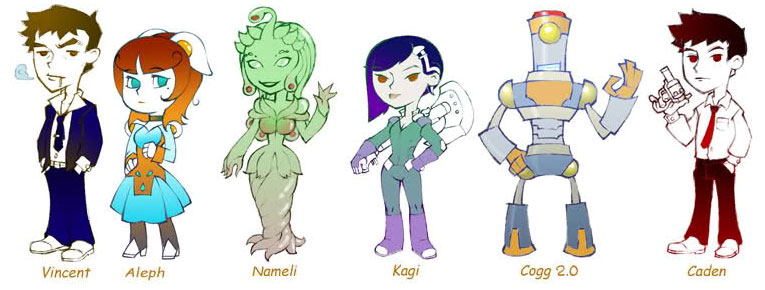
Most of the main cast of the original Divine Machine campaign; a guy who manifests different powers in each dimension, a girl who’s also a giant robot, a sentient plant and thief, a gray-skinned girl who can unlock anything, a modular robot, and a magic gunslinger/detective. Not Pictured: an anthro dog scientist/soldier, a Catholic priest with holy magic, a deranged goddess, the ship’s computer, and an obnoxious little demon girl.

At the heart of the multiverse is the Divine Machine, a great mechanism that takes up an entire universe, its parts made of solid information, where godlike beings create and shepherd entire universes. Magic is real, but it’s ultimately a way of accessing the Divine Machine in limited ways, and not available in all universes. The multiverse is home to a number of interdimensional nations, notably the Northstar Alliance (an interstellar civilization that expanded to be an interdimensional one, and which uses magic-tech kind of like the TSAB in Lyrical Nanoha), the Ix (terrible xenocidal cyborgs, which are kinda like Daleks), and the Holy Velkan Empire (expansionist mage supremacist religious fanatics). Looking back at my notes on the campaign, there was just a ton of really neat stuff in it that I’d like to do something with.

The huge campaign I ran before that was Star Sorcerer (which I’d toyed with renaming Ether Star or some such), which took place in an interstellar civilization that had rediscovered magic and refined it into “ether science” that in turn was behind a lot of their technology, including most of their faster than light travel and communications. I actually made some of the Star Sorcerer characters a key part of the Divine Machine campaign as part of an overall pattern of dropping characters from other things in now and then. Although I’d always intended for the Northstar Alliance to use magic-tech, if I do a full Divine Machine RPG I’ll definitely fold the Galaxy Alliance from Star Sorcerer into it, since they feel a bit redundant when they’re side by side.

Maya, an obnoxious little demon girl.

The big question is how the heck to make some kind of actual game out of it, especially given that I’ve made such a ludicrously broad setting. I’ll most likely have the game concentrate on some kind of elite troubleshooting squads from the Northstar Alliance, but that still means I need a game that can encompass a very wide range of characters and situations. At some point I’d like to make an RPG along the lines of one of F.E.A.R.’s SRS games (Alshard and its relatives), but that would let me make maybe a dozen solid archetypes through a lot of work. Right now I’m envisioning something in the general orbit of FATE, PDQ, and Cortex+, explicitly including a story mapping mechanic a la Pathways and Entanglements. Defining things in more narrative terms makes it easier to cover more ground without a ridiculous amount of design work, plus I’ve found that games like Spirit of the Century and Marvel Heroic Roleplaying are a lot closer to the type of game I really wanted all along than OVA[1]. I really need rules that can gracefully scale from a fistfight to literally universe-shaking conflicts. I can see the overall shape of the game in very general terms, but it’s going to be a while before I can really make time to properly work on it.

[1]OVA is great if it’s the kind of game you do want, and I’m not just saying that because I’m friends with Clay. I always say it’s the game that BESM was trying to be but never quite pulled off.

Magical Burst Update Number Whatever

Even though I have like a zillion other things to do, I got inspired to put in some more work on Magical Burst, which I’m sure a lot of you will be glad to hear. I have no ETA on when the next draft will be ready, but I’m in the thick of things working on it in any case. This post is a series of disconnected paragraphs on some of the different bits I’m working on.

I mentioned it in my last post on the game, but one of the big things I’m doing is more clearly writing out the procedures of play, which I think is really important. The big thing that I’ve kind of been groping towards is that the game and its source material are driven by “shocks.” In Madoka Magica the narrative has a constant escalation of shocking revelations, and in Magical Burst a lot of the rules are ultimately an engine for delivering similar kinds of shocks. I want to make it crystal clear in the text that this is the GM’s key tool for making things happen in the game. A whole lot of RPGs leave that kind of thing to trial and error, but I’m aiming for a fairly specific play style. There’s also the part about how my first playtest was kind of flat and I think not pushing the shocks was partly to blame.

In the 3rd draft I added Apocalypse World style moves to the game, especially for non-magical stuff. I did so kind of thoughtlessly, and now that I have some more experience with Apocalypse World (and Dragon World) I have a better idea what it is about the game that does and doesn’t work for me and the friends I play with.[1] The big problem I’ve had with moves is that players tend to want to treat moves as push buttons rather than role-playing towards them first. (Doubly so for moves that use a highlighted stat.) My solution is to treat moves a bit more as a thing the GM brings to bear, and to remove them from the player reference sheets. Moves don’t have to be secret from the players, but I do think the game could work better if the moves weren’t staring the players in the face the whole time. I’m also going to be rewriting them a bit to better fit this GM-oriented approach. I pared down the Normal Attributes to Charm, Insight, and Tenacity too, and let players assign points for them (but with fewer points and lower values than Magical Attributes). I still need to dig into moves and such to get a better feel for them though.

My philosophy for revising the rules for youma this time around is basically, “Make them fucking MEAN, and scale back later if need be.” My experience and pretty much all of the feedback I’ve gotten so far as been to the effect that as written youma tend to get wiped out pretty quickly, which isn’t anything like what I’d intended. It’s surprisingly hard to make good “boss monsters” (or solos in D&D4e parlance) that can effectively fight a full team of PCs, and I think that for the purposes of designing such enemies I need to ignore some of the kind of advice that I think of as good sense in other circumstances, like being stingy with extra actions in a combat round.

I renamed Appendix 1 to “Instant Magical Girl,” and I’m working on expanding the tables enough to make it possible to generate a completely random magical girl. I had intended for it to be more of an optional thing for people to turn to when they’re stumped, but it’s pretty clear it’s become core to how a lot of people play the game. The folks from the Empire Tabletop podcast (who previously did Maid RPG) did a Magical Burst AP episode, and their attitude was basically, “Why would you ever NOT make a character randomly?” For attributes I’m working on a d66 table that gets you one of 36 sets of attributes, and I rearranged the tables so that they follow the same steps as the character creation rules. When I mentioned that I want someone to make an online random magical girl generator on Twitter I got three replies almost immediately, so it’s pretty much guaranteed to be a thing that will happen. I may try to get the youma rules to the point where you can generate one totally at random too.

Update: Carly M. Ho put together a great little Magical Burst character generator!

Update Again: And then she went on to make a Youma Generator and a Tsukaima Generator!

I have a rough outline for a Magical Burst novel about Yuna and Makoto (from the intro comic script), though I’m struggling a bit figuring out how to get started and how to find the right tone. (Watching Brick the other day has me wanting to explore a stark noir style.) I like the idea of making it a tie-in with the game with game stats and info for the characters and such in the back, but first I have to, you know, write a novel and make it not suck. I’m actually worse at finishing novels than I am at games, if you can believe that.

I just finished re-reading Planet Guardian, a manga which hardly anyone but me seems to know. (Even scanlations haven’t gotten past chapter 2.) It doesn’t have all that much influence on Magical Burst, but I like it a lot nonetheless. The main character is Koyuki Kisaragi, a girl who got magical girl powers from a little critter named Pirosuke. Five years later there’s been no sign of the alien criminals that were supposed to show up, and Koyuki just wants to study hard and get a cushy government job (and Pirosuke has gotten so fat that he’s spherical). When the first bad guy shows up, Koyuki goes to fight it only after massive badgering from her brother Itsuki, who berates her for failing to be a properly cute magical girl like in anime. When another magical girl shows up it’s Ririka Saotome (real name: Yoshiko Yamada), an abject psycho whose desire to be the center of attention is potent enough to break the fourth wall at times. There’s also a boy named Shizuku, who treats being a Guardian as a serious duty, at least once he gets over his older sister’s attempts to dress him up in weird outfits. The story is kind of random and aimless, but I really like the differing attitudes towards being a magical girl (or boy) on display, as well as how Koyuki’s attitude evolves over the course of the story as she starts to take the responsibility of protecting the world seriously. But anyway. I may see about ordering the Madoka Magica novel, though it’s apparently over 500 pages.

[1]AW style experience tracking pretty much just fails for us, though that’s more relevant for Dragon World. It’s also related to enough other things that rejiggering the rules to work differently in Dragon World is going to be… interesting.

Beyond Otaku Dreams

I had yet another idea for a game. Not that I’m going to do much with it any time soon.

I recently went to FanimeCon, a local anime convention. I’ve watched Fanime grow from a meeting of multiple anime clubs at a community college to one of the bigger anime conventions in the U.S., and if I’m honest, for me it had a sweet spot in the late 90s that it’s left far behind. But there are about 20,000 people who think it’s worthwhile, and a lot of them seem to love it without reservation. Even so, there’s been drama among my friends at cons, and every now and then I’ve caught a glimpse of someone in real pain and wished I could do something. I feel like narratives about fandom tend to be either too sanitized or too cruel, presenting either an idealized vision of fandom or painting an entire swath of people as obnoxious and worthless. In real life, in my reality, anime fans are just people. They can be amazing as well as horrible, but most of all they never stop being human.

Another thing I’ve been wanting to put into some kind of creative project of some kind is the idea of otaku whose delusions take on a life of their own, who live somewhere between worlds of dream and reality. A character might have a perfect dream companion, an imaginary lair to retreat to, or special powers they wield in their world of delusion, which reveal things about them. Their delusions sometimes go out of control, sometimes intersect and combine in ways that should be impossible, and occasionally leak into normal reality. Lately I’ve been really enjoying Akibaranger, a parody/spinoff sentai series where the heroes’ battles take place in a shared delusion, at least at first, distracting them from their real-life troubles. The way they’re so conscious of sentai tropes adds a certain charm too, especially when things don’t line up with their expectations.

I’d had the idea to do a game like this before, but I think it was missing the pathos, the uncompromising human drama. The desire to escape from reality is at its most poignant when you have something to escape from. I also want it to be about people who do have a chance at redemption, who can overcome the issues that drag them down. Maybe it’s my way of telling people that there’s still hope. There was a thing called Densha Otoko (it started out as a forum thread and went on to be in a ton of different media) about a hopeless otaku who through happenstance made contact with a normal woman by saving her from a drunkard’s harassment on a train. The thing that bugged me (and I think a lot of people) about it was how he had to completely leave his fandom behind and force himself to be “normal.”[1] Real life experience tells me that you don’t quit your obsessions cold turkey, but rather find ways to make them grow up along with you.[2] You can change for the better without having to not be yourself.

I haven’t gotten very far with this game, and I don’t intend to until I’ve got some other things dealt with (Golden Sky Stories and Magical Burst). What I do know is that it will be something like an otaku version of Don’t Rest Your Head, one of those indie games with baroque mechanics that feed interesting stuff into the story.

[1]This assessment of the story may be a bit flawed because I never got around to finishing the Densha Otoko TV drama, but let’s ignore that because my version illustrates the point that comes next really well. OTOH the series’ opening was fantastic, a sendup to the Daicon IV opening animation.

[2]Personally I’m still working on it, but I’m getting there. I think.

Golden Sky Stories Update: Progress and Bonuses

I figure we’re a bit overdue for an update on what’s going on with Golden Sky Stories, so here goes. Right now the plan is to launch the GSS Kickstarter on the heels of Tenra Bansho Zero‘s Kickstarter. Assuming Andy and Luke keep on schedule, that means we should be launching the GSS Kickstarter around the end of June. That means we have a couple more months, and we’ll be using that time to get everything in order so that when we do our own Kickstarter we’ll be that much more able to get everything out to everyone without undue delay.

Slow and Steady Does the Layout
The graphic designer for Golden Sky Stories is none other than Clay Gardner. He is the designer of OVA: Open Versatile Anime, and has done graphic design work for a huge variety of projects, including several games from Minion Games. The original Japanese version of Golden Sky Stories was already a feast for the eyes, but Clay is using his graphic design skills to add another layer of polish all the same. He recently put up a blog post where he shows off what he’s doing with the power descriptions for rabbit henge. Clay’s currently about halfway done with the layout, and I’m really liking how it’s looking so far.

Something Fishy
A while ago I hit on the idea of making a new, original character type for GSS as a Kickstarter reward. Ben Lehman (who you may know from games like Polaris and Bliss Stage) stepped up and offered to try his hand. About a day later he sent me his first draft of a writeup for fish henge. We’ll be doing some refinements between now and the Kickstarter of course, but Ben’s writeup is already wonderfully whimsical and mythical. It’s a bit of an “advanced” character type that’ll be a little tricky to play.

I’ve also been working on a writeup for “pony henge,” which are indeed partly inspired by My Little Pony: Friendship Is Magic, albeit with plenty of elements inspired by reading up on horses on Wikipedia. Looking up idioms/cliches about an animal is a great way to come up with powers for henge by the way. I’m still working out what exactly to do with these new writeups, but at present I’m thinking of having the fish henge be a Kickstarter exclusive and having the pony henge be a freebie.

Slime Quest: The Big Idea

The other day some of my friends (Suichi and Mike B., with some help from Tim) went crazy brainstorming possible stuff for Slime Quest while I wasn’t around, and then laid out everything for me as best they could. They came up with some really intriguing ideas, though I’m kind of at a loss for what to do with them.

The core Big Idea is to speed up combat by getting rid of attack rolls (and defense rolls). Characters would have attacks and defenses of varying potency, and when an attack comes the onus is on the target to provide a sufficient defense and not take damage. Classes would thus be differentiated by the kinds of attacks and defenses they have, and how often they can use them. A tanking fighter could have defenses that let him defend against several enemies at once, a mage could be adept at making barriers to protect from magic, a leader could give allies boosts to attacks or defenses, a rogue might be able to lower or ignore a target’s defenses, and so on. The actual damage would be random, and more like in a typical RPG, with the difference that higher-level attacks get damage bonuses when they prevail against lower-level defenses. Teamwork also can become very important, since multiple characters working together can jump up in attack ranks to affect enemies that would be basically impossible to harm otherwise.

This cuts out several steps from typical D&D-style combat, but it also means adopting a new brain-bending paradigm of combat, and figuring out how to actually balance it so that characters have the right level of competence and challenge. Balancing resource-based stuff is that much harder, especially when you use the resources for typical RPG things. I like resource-based mechanics in RPGs, but I do feel that when you put them into places where they can determine success or failure they can create perverse incentives that are hard to properly manage.
Continue reading Slime Quest: The Big Idea